


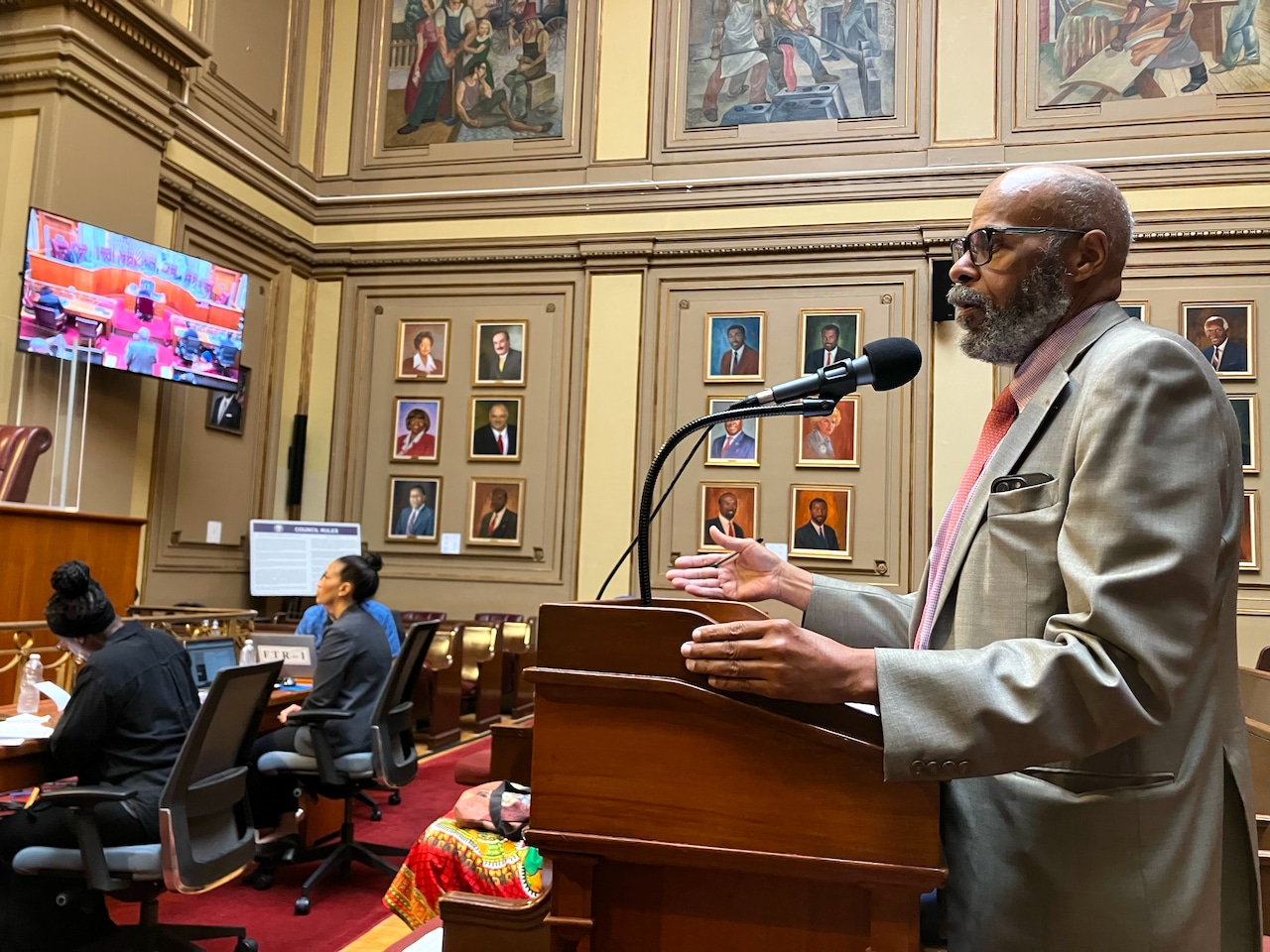
The average homeowner in Newark will pay $564 more in municipal property taxes in 2025, an increase of 14.4%, under a proposed $970.2 million municipal budget introduced by city officials on Thursday.
A public hearing and vote to adopt the budget will be scheduled for some time after Sept. 24, at least 28 days after the City Council voted to introduce the budget during a special meeting.
The increase would put the average Newark homeowner’s total municipal tax bill for 2025 at $4,459, up from an average of $3,895 in 2024, according to analysis of the budget’s tax impact provided to council members by City Business Administrator Eric Pennington
This year’s increase was three times the size of the $190 average increase last year, after an even more modest $109 hike in 2023. Pennington said the figures represented a cumulative success by the administration of Mayor Ras J. Baraka to hold down taxes over the past several years.
The dollar amounts of this year’s increase and total annual bill are based on a municipal tax rate of $2.33 per $100 of assessed value and a home assessed at $191,065, the citywide average. Owners of homes assessed at less than that will see a smaller increase, while more expensive homes will mean a larger hike.
The city’s nearly billion-dollar budget for the current calendar year increases spending by $54 million, or 5.9% more than the $916 million spending plan for 2024, an increase Pennington attributed in part to raises built into existing employee contracts.
Another cost increase comes in the form of $30 million the city owes to Essex County under a process known as equalization.
The process accounts for differences among Essex municipalities in how closely they assess the value of their properties relative to their true market value based on actual sale prices.
Citywide, Newark’s property is assessed at about 50% of its market value, Pennington said. That low equalization rate compared to the higher rates of other Essex cities and towns means Newark is underpaying its share of county taxes.
Pennington attributed the assessment-to-market value gap to rising sale prices of city properties as Newark’s housing market continues to heat up.
“The sales of our houses, which is a good thing, have increased disproportionately to the assessed values of the properties,” he told the council.
Newark’s low assessed values resulted in a $22 million equalization payment to the county in 2024, and Pennington predicted the imbalance will continue next year.
He said the equalization problem would be solved in 2027, when a citywide revaluation intended to update assessed values will be completed.
He later said the revaluation will have the added benefits of redistributing the tax burden on local property owners more accurately and therefore more fairly, while boosting the overall assessed value of city property to better account for new residential and commercial development, therefore increasing city revenues.
As usual, the city is considering its 2025 calendar year budget with much of the year gone by, after having waited for municipal aid figures in the state’s fiscal 2026 budget adopted on June 30.
The city has been operating on temporary appropriations funded by estimated tax bills up to now.
Council members expressed concern over this year’s spending and tax increases, and asked Pennington to come back with more information prior to the budget’s adoption.
Councilman Anibal Ramos asked whether the estimated tax rate was close to the final rate struck under the proposed budget. An underestimated rate could mean that the taxpayers will be hit with a big fourth quarter bill to make up the difference.
“It’s fairly close,” Pennington told Ramos.
“Unprecedented” is how Councilman Carlos Gonzalez described a 9.4% increase in the municipal tax levy — $298 million raised by local taxes — especially compared to a 1.3% decrease in the county levy, to $66.3 million.
Councilman Patrick Council asked whether the administration was making sure it collected a 1% payroll tax from large employers, which the state’s largest city alone is authorized by lawmakers to impose.
Pennington assured him the city was working with the state to ensure it had up-to-date payroll data.
Council president C. Lawrence Crump led the 6-0 vote to approve the budget’s introduction, joining Council, Ramos, Gonzalez, Louise Scott-Rountree, and Luis Quintana.
Dupre Kelly and Michael Silva were absent, and the board’s ninth seat remained vacant pending a Nov. 4 special election to replace Lamonica McIver after her election to Congress last fall.
Crump said no one wanted to see a tax hike, but the alternative — cutting services — could have a harsher impact, whether on trash collection or other vital services.
“The question is, how do we balance it all out?” Crumb said.
Among the handful of residents who addressed the council on Thursday, some questioned the council’s continuing approval of tax abatements for large developments even as they asked homeowners to pay more.
“The Halo building gets a tax abatement,” said Lisa Parker, a resident of the Society Hill condominium complex, referring to a overdue skyscraper project. “And yet the good working people of Society Hill can’t get you to give them an abatement extension.”
Nobody knows Jersey better than N.J.com. Sign up to get breaking news alerts straight to your inbox.
Steve Strunsky may be reached at [email protected]
If you purchase a product or register for an account through a link on our site, we may receive compensation. By using this site, you consent to our User Agreement and agree that your clicks, interactions, and personal information may be collected, recorded, and/or stored by us and social media and other third-party partners in accordance with our Privacy Policy.
