


The basics:
- Stevens Institute eliminated dozens of staff positions last month
- University cites federal policies on research and student visas
- International students contributed $172M to 2023 budget
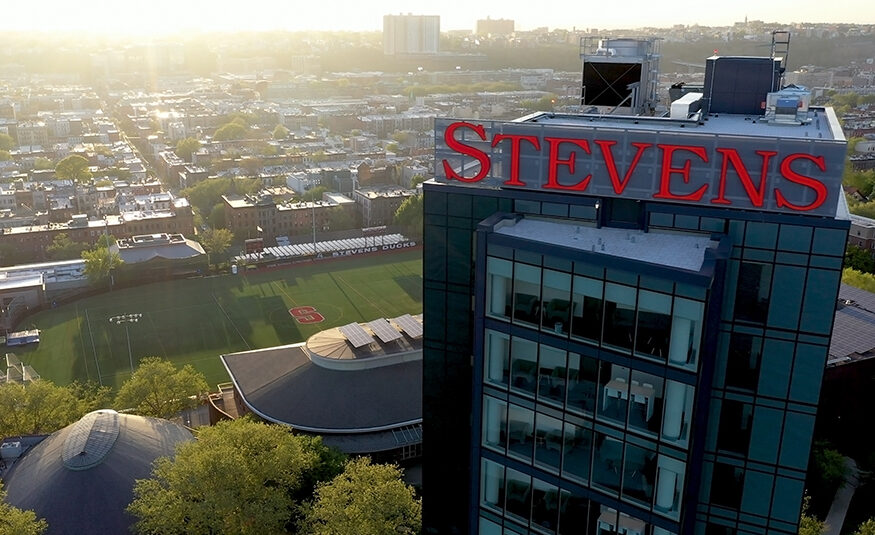
Citing federal policies implemented by the Trump administration, Stevens Institute of Technology said it made the “difficult but necessary decision” to eliminate 45 staff positions.
In a statement confirming the cuts, a spokesperson for the Hoboken-based private university said, “Like many institutions across the country that have adjusted expenses to address revenue shortfalls resulting from changes in federal policies–including in international student enrollment and research funding–Stevens is navigating these challenging conditions.”
The media representative added, “These painful reductions have been made with the goal of ensuring continuing support of our key mission–to promote student success and the creation of new knowledge through our faculty’s research programs.”
According to Stevens, the layoffs occurred Aug. 19. The spokesperson declined to provide more details about what types of positions were affected.
Considered one of the top universities in the U.S., the school is known for its strength in engineering, innovation, value and career outcomes.
Stevens employs 356 full-time faculty members and 755 full-time staff members. It also has 126 part-time staffers, according to its website.
In 2024, Stevens enrolled more than 8,400 students, with 4% undergraduates and 58% graduate students coming from abroad. These international students contributed $172 million to the university’s 2023 budget—supporting nearly 1,700 jobs, according to NJ Advance Media.
“Stevens is committed to treating all affected employees with dignity, fairness and respect, providing appropriate separation packages and transition support,” the university spokesperson said, adding that officials “will continue to monitor ongoing external factors and act with the best interests of our students, faculty and colleagues in mind.”
As part of a larger crackdown on immigration, the White House is trying to limit the number of international students enrolling in U.S. universities. The administration has stepped up student visa scrutiny and restrictions, as well as begun pushing new rules for how long international students can stay here.
It has also threatened to slash federal research funding eligibility to many universities deemed noncompliant with mandates regarding DEI practices, campus antisemitism and political demonstrations.
Princeton University had over $200 million in research grants suspended amid a federal probe into alleged campus antisemitism. In response, it implemented a hiring freeze, joined a lawsuit, and defended academic freedom while preparing for long-term financial impacts.

In addition to facing targeted disruptions of federal research grants, Rutgers University has found itself under increased scrutiny by the federal government. While it canceled a major HBCU-related conference and is under civil rights investigation, the state university continues to publicly support diversity and inclusion.
‘The most tumultuous and uncertain period’
Earlier this year, Stevens President Nariman Farvardin expressed concerns over how potential downturns in research funding, tariff-driven cost increases and economic instability will impact institutional budgets.

“Certainly, this is by far the most tumultuous and uncertain period in higher education in several decades,” he wrote in a March letter to faculty, staff and students. “As an institution that receives significant federal funding — approximately $50 million per year in various types of student aid and more than $47 million in federal research grants in FY24 — we recognize the importance of aligning with these new federal directives, and we must prepare ourselves for yet unforeseen impacts.”
“Due to the significant uncertainties that lie ahead that could affect research awards, research indirect cost recovery, international enrollments, possible price escalation due to tariffs or an economic downturn, the leadership team is meeting regularly to review institutional and divisional budgets to proactively mitigate the potential for negative impacts from external factors,” Farvardin said.
“Our primary focus remains on preserving the quality of our academic programs and our students’ experience while exercising appropriate fiscal responsibility and trying to avoid more draconian measures that some universities have had to implement.”
Billions in lost revenue
By the numbers
New international enrollment in the U.S. could drop by 30% to 40% this fall.
– SOURCE: NAFSA: Association of International Educators
Preliminary projections by NAFSA: Association of International Educators showed that new international enrollment in the U.S. could drop by 30% to 40% this fall. The decrease could result in nearly $7 billion in lost revenue and more than 60,000 fewer jobs, according to the analysis.
Within New Jersey, the predicted loss for the 2025-26 academic year is more than $148 million, NAFSA said.
Fanta Aw, executive director and CEO of NAFSA, commented, “The immediate economic losses projected here are just the tip of the iceberg. International students drive innovation, advance America’s global competitiveness, and create research and academic opportunities in our local colleges that will benefit our country for generations. For the United States to succeed in the global economy, we must keep our doors open to students from around the world.”
