


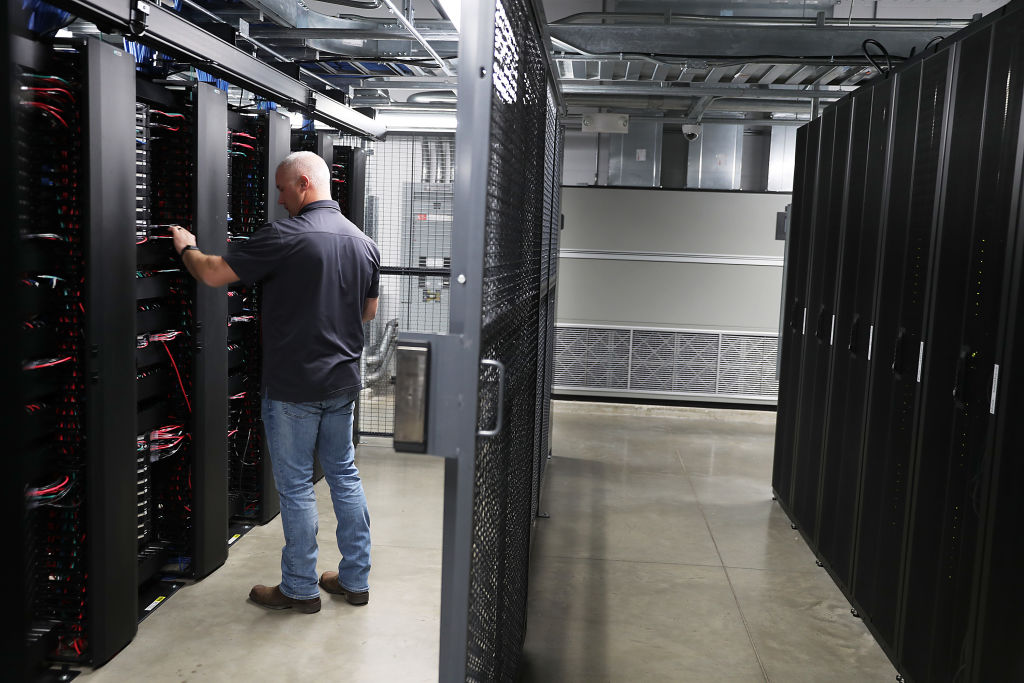
Curt Collicott is seen as he works among the racks and network switches in the data center of the LightEdge Solutions company in Altoona, Iowa. The Rev. Willie Dwayne Francois III argues that data center owners are not paying their fair share of rising electric costs. (Photo by Joe Raedle/Getty Images)
By the Rev. Willie Dwayne Francois III
On a scorching Monday in August, I participated in a consequential conversation on the energy crisis facing our state and learned about the actual contributors to inhibitive cost increases.
At an event hosted by STONO Public Affairs, 30 faith leaders from around the state conversed with the president of the Board of Public Utilities, Christine Guhl-Sadovy, about the impact of rising electric bills on New Jersey’s low-income communities and what programs exist to help customers experiencing devastating challenges paying their bills.
New Jersey offers a range of assistance programs that, unfortunately, few people know exist or how to access. As someone who hears from congregants and community members every day about their financial struggles, I commend STONO and the Board of Public Utilities for jointly organizing this event to make visible the people hurting most acutely from this reprehensible energy crisis.
This moment of affordability chaos necessitates that faith communities, government, and community-based organizations do more to bridge the gap and raise awareness around these programs, as our neighbors and family members suffocate under the tightening squeeze of unchecked energy costs.
Every year, we see more days with extreme temperatures due to climate change, with historically Black, brown, and low-income communities living in sections of towns where temperatures are 7 to 10 degrees Fahrenheit higher than in more affluent communities inhabited by white people. The combination of extreme weather and escalating power costs uniquely compounds the health and financial crises that countless families struggling to get by know all too intimately.
While improving outreach to communities about available assistance will help to stop the bleeding, we, likewise, have a moral obligation to address the root cause of this odious crisis. A growing consensus among utility providers, academics, and advocates alike continues to take shape concerning the direct link between our rising energy costs and increased demand due to the rapid expansion of data centers and artificial intelligence. Despite agreement on the causes, there is little discussion about long-term solutions to these escalating costs for those who can least afford them.
The expert class, business leaders, and everyday users laud artificial intelligence as the most tremendous technological advancement since the advent of the internet. Companies are stampeding forward to invest in their own AI systems, claiming it will lead to innovation across sectors and ultimately yield a big payday for countless people. The unfortunate side effect of this promising new sector is the massive amounts of energy AI data centers use.
At the onset of this new technological revolution that portends to amplify creativity and generate unimaginable wealth, we should be equally creative in our attempts to meet this moment differently than we did at the onset of the internet. Rather than allowing this revolution to overburden and punish the vulnerable, we should find creative ways for it to subsidize those who will see repressive upticks in expenses due to the actions of techno-capitalists. For people living paycheck to paycheck, a 20% increase on a $200 to $300 electric bill is enough to break the bank.
We must find ways for this technology to be an unadulterated good for everyone instead of a burden for low-income people merely trying to get by. It’s sinful to tie our hands, bury our heads in the sand, or permit our tongues to cling to the roofs of our mouths while corporations get rich on the backs of working families.
We are not asking companies to stop pursuing innovation and teasing out new possibilities from AI. We’re simply asking these corporations to pay their fair share. If the industry intends to endure, data-center developers — makers of these humming plants of consumption — must chip in for wide-reaching and systematic utility assistance and invest in the infrastructure necessary to support their energy demands. Sustainability for these companies looks like returning something to the people who make their profits possible.
What opportunities did we miss before the dawn of the internet and social media to ensure that they would be assets and not burdens to the rest of society? What tax considerations did we miss that would have benefited the least among us and the innovators who created the technology?
We obviously missed opportunities for fairness and justice at the dawn of the internet, but the stakes are too high now for us to allow history and the present to rhyme by repeating the same mistakes. We know more about the causes and effects of climate change alongside the polarizing residual effects of technological advancements like social media. We can ill-afford another revolution to happen without drawing clear guidelines to ensure the titans of industry pull their weight.
The gravity of this swelling crisis calls for an economics of repair as the only legitimate moral response to reinforce the undying dignity of hardworking people straining to make month and money meet. No one working two jobs and driving Uber to keep the heat and hope on should bear the cost of increased demand usage by the billionaire data center industry. In fact, it should be the opposite: A family should enjoy financial relief on their utility bill because this billion-dollar industry is able to exist. We have a chance to do things right this time around. Let’s not squander it.
The Rev. Willie Dwayne Francois III is the senior pastor of Fountain Baptist Church in Summit and an associate professor of theology at Union Theological Seminary in New York City.
