


Two weeks before the Third Circuit Court of Appeals hears a dispute over whether acting U.S. Attorney for the District of New Jersey Alina Habba was appointed unlawfully, ten former U.S. Attorneys – spanning the Reagan to the Biden administrations – are coming forward to argue against Habba’s legitimacy.
In an amicus brief filed yesterday, the former Justice Department officials said that U.S. District Court Judge Matthew Brann was correct when he ruled in August that the extraordinary maneuvers used by President Donald Trump’s administration to install Habba after her initial appointment expired were invalid in several ways. Brann’s decision barred Habba from executing the duties of the U.S. Attorney, but he stayed his own ruling pending appeal, so Habba remains in limbo for now.
Appointment laws, the ex-U.S. Attorneys said in their brief, are specifically designed to prevent presidents from installing “unfit characters” into important roles without checks and balances from either the U.S. Senate or the federal judiciary – a not-too-veiled dig at Habba, who had no prosecutorial experience prior to her appointment and who has taken an unusually politicized approach to her job.
“The FVRA [Federal Vacancies Reform Act] carries out the Framers’ intent to prevent a President from using unconfirmed temporary appointments to fill critical federal positions with unqualified loyalists or inexperienced cronies merely intent on doing his bidding,” the U.S. Attorneys wrote.
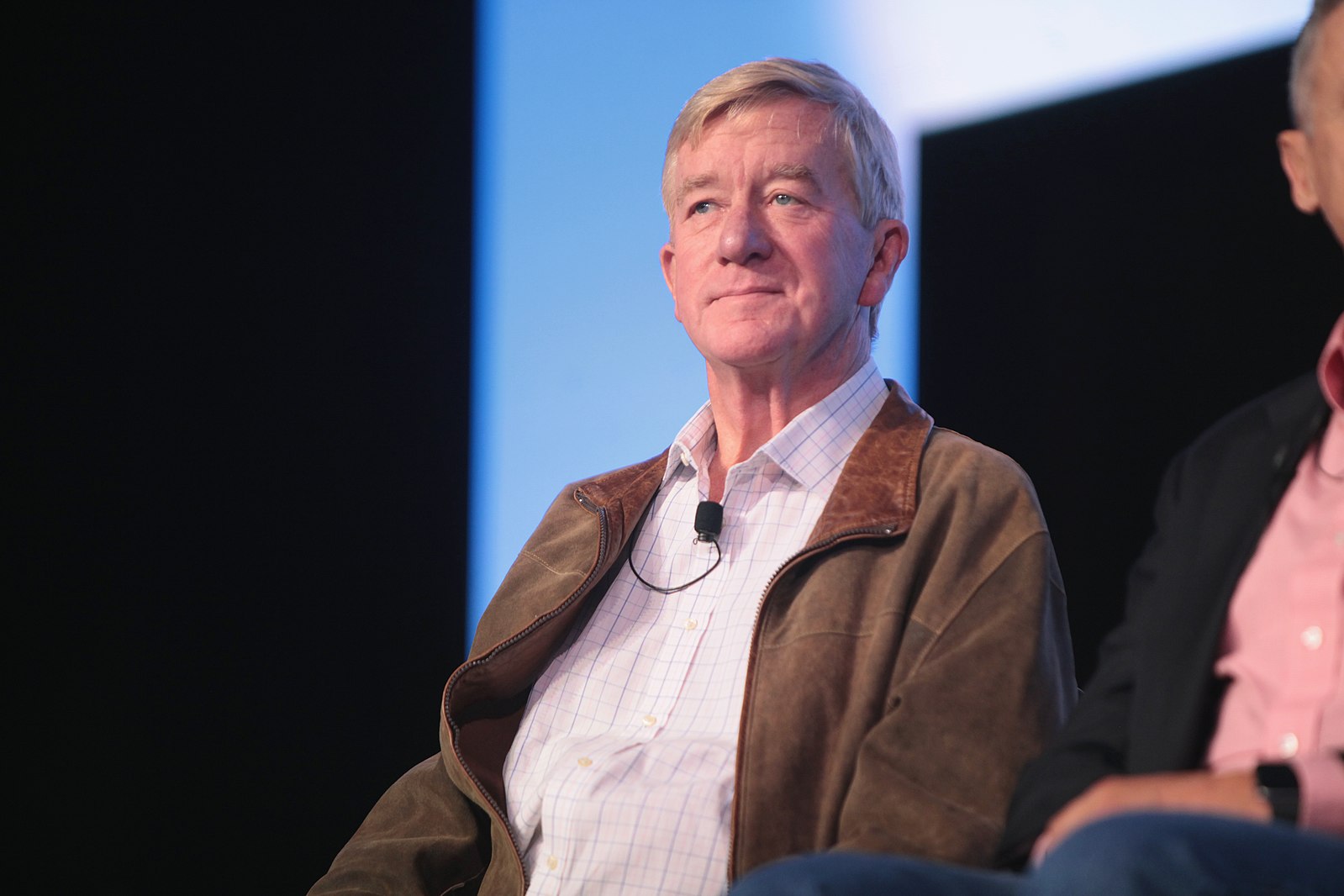
Among the signatories of the brief are Donald Ayer, a former U.S. Attorney in California under Ronald Reagan and the Deputy U.S. Attorney General in George H.W. Bush’s administration; Bill Weld, the U.S. Attorney for Massachusetts during the Reagan administration who later served as governor and the Libertarian Party’s vice presidential nominee; and Daniel Bogden and John McKay, two of the nine U.S. Attorneys controversially dismissed under George W. Bush in a scandal that later led to the resignation of Attorney General Alberto Gonzales.
Every presidential administration from Reagan onward, both Republican and Democrat, is represented in the cohort of ten U.S. Attorneys, save for one: no appointees of President Donald Trump are on the list.
The U.S. Attorneys also noted that the offices they once held are “unusually powerful” and are vested with “extraordinarily broad discretion,” thus necessitating impartial and experienced officeholders – something that they said can be better guaranteed when unilateral presidential appointments are limited and the Senate plays a role in the confirmation process.
“To ensure continued public trust in this powerful office, U.S. Attorneys must exercise the authorities of their office responsibly, based on the facts and the law, and free from actual or perceived political interference and favoritism,” they wrote. “For these reasons, Congress developed a strict statutory framework to limit temporary executive appointments of a U.S. Attorney where the position is not filled by a Senate-confirmed candidate.”
Two other amicus briefs were filed in the case by a bipartisan group of current and former members of Congress, many of whom were involved in the passage of relevant appointment laws in 2007. The briefs, which were similarly filed during the District Court proceedings, argue that allowing the Trump administration’s interpretation of appointment procedures to stand would fly in the face of the original legislative intent behind the laws.
Habba, Trump’s former personal attorney, was first appointed to the role of interim U.S. Attorney in March, a job title that comes with a term limit of 120 days before requiring either confirmation by the U.S. Senate or a vote of New Jersey’s District Court judges. The Senate never confirmed Habba amid opposition from New Jersey’s senators, and when Habba’s term expired, the state’s federal judges appointed Habba’s deputy, First Assistant U.S. Attorney Desiree Grace, to succeed her.
The Trump administration, however, was unwilling to allow Habba to be ousted; Attorney General Pam Bondi fired Grace and appointed Habba to the role of First Assistant U.S. Attorney, automatically elevating her to acting U.S. Attorney. The controversial scheme was challenged as unlawful by three defendants facing prosecution in the District of New Jersey, and Brann issued his ruling against Habba on August 21; the Trump administration appealed soon afterwards.
Oral arguments before a panel of Third Circuit judges, two of them George W. Bush appointees and a third appointed by Barack Obama, will be heard on October 20. Attorneys representing the defendants who challenged Habba’s authority submitted their last briefs yesterday, largely repeating the arguments they’ve made many times before: federal law is designed to give presidents some leeway over judicial appointments, but constrains them from having absolute authority with no input from the other two branches of government.
“Adopting the Government’s reading of the FVRA and related statutes would permit the Executive to perpetually install an individual the Senate has not confirmed, and likely would not confirm, as the head of a U.S. Attorney’s Office,” one brief states. “Such an outcome defies Congress’s carefully drawn framework and consolidates the appointment power solely in the Executive – which is precisely what the Framers and Congress sought to prevent.”
One important new development has occurred since Brann issued his initial ruling, however: the progression of a similar case in Nevada. There, as in New Jersey, the Trump administration installed a controversial ally as acting U.S. Attorney after her interim appointment had run out; there, as in New Jersey, a District Court judge ruled that such maneuvers violated the law, a ruling that several parties referenced in their filings yesterday.
“The Court cannot accept the government’s assertion that the Attorney General has power to designate anyone she chooses as first assistant and have that person become the acting U.S. Attorney,” District Judge David Campbell wrote in the Nevada case.
US Attorneys amicus
