


Tri-State Infrastructure News Network original article

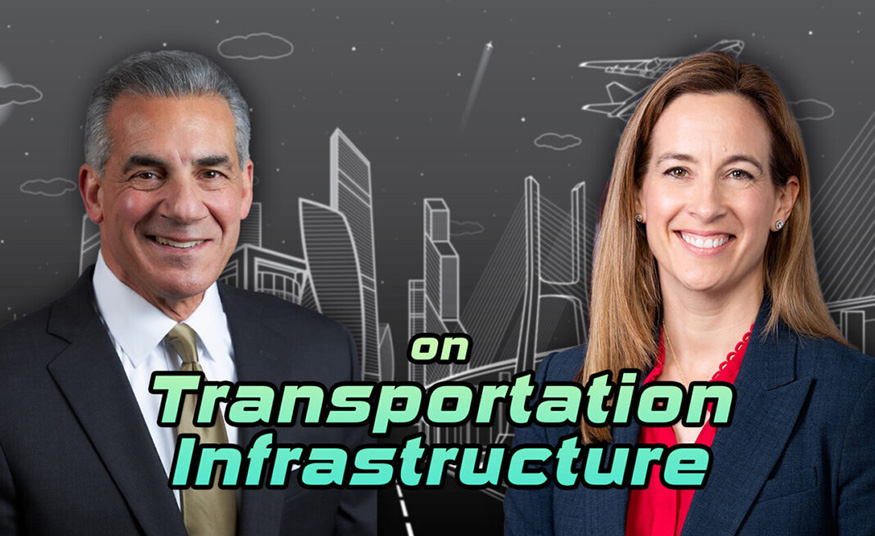
The 2025 New Jersey gubernatorial race between Democrat Mikie Sherrill and Republican Jack Ciattarelli presents a clear contrast in transportation infrastructure policy and philosophy. Both candidates recognize the state’s pressing needs – especially regarding NJ Transit and its real estate—but their approaches diverge sharply on investment, priorities, and vision for the future.
Jack Ciattarelli: Fiscal Restraint and Urban Redevelopment
Jack Ciattarelli’s platform centers on fiscal conservatism, emphasizing lower government spending, property tax relief, and business incentives, while opposing overdevelopment in suburbs without adequate infrastructure and expressing caution toward major transit investments.
Key elements of his approach include:
- Capping property taxes and reducing the state’s corporate business tax, with corresponding cuts to state spending.
- Opposing state mandates for affordable housing in suburbs without adequate infrastructure, arguing that current laws force overdevelopment in unsuitable locations.
- Focusing new housing and economic development in urban centers with existing transit and infrastructure, rather than expanding mass transit or building in the suburbs.
- Skepticism toward large-scale transit expansion: Ciattarelli has not prioritized major new investments in NJ Transit or Amtrak, and his platform does not emphasize federal funding or ambitious rail projects.
- Redeveloping NJ Transit land: Like Sherrill, he sees potential in NJ Transit’s property portfolio, but his focus is on maximizing economic returns and revitalizing urban areas, rather than transit-oriented affordable housing.
Ciattarelli’s legislative background is marked by calls for budget cuts, lower taxes, and a more limited government role in infrastructure. He has not championed major transit funding bills and has criticized what he sees as inefficient or excessive spending on mass transit. Instead, he proposes:
- Redirecting state resources to urban revitalization and business development.
- Limiting new infrastructure commitments to what can be supported by existing revenue, rather than seeking large federal appropriations or new state spending.
Mikie Sherrill: Transit-Centered Investment and Federal Leverage
Mikie Sherrill’s platform emphasizes investment in public transportation, climate resilience, and securing federal funds for infrastructure. As a member of Congress, she has championed the Gateway Tunnel Project and supported the Bipartisan Infrastructure Law, which allocated billions to New Jersey for transit improvements. Sherrill views transit investment as vital for both economic growth and climate action, aiming to enhance reliability, affordability, and sustainability.
Key elements of her plan include:
- Securing and deploying federal funds for NJ Transit, Amtrak’s Northeast Corridor, and major projects like the Gateway Tunnel.
- Prioritizing mass transit improvements over highway expansions, except where road projects are necessary and environmentally justified.
- Expanding affordable housing and economic development near transit hubs, using NJ Transit’s underutilized land as a catalyst for revitalization.
- Opposing fare hikes and advocating for increased service reliability, particularly for daily commuters.
- Fighting external threats to New Jersey commuters, such as New York’s congestion pricing plan, which she has called a “huge tax on New Jersey commuters” and pledged to challenge in court.
Sherrill’s congressional record underscores her commitment to infrastructure:
- She was a leading advocate for the Bipartisan Infrastructure Law, helping secure funding for 25 passenger rail projects on the Northeast Corridor, including the Gateway Tunnel and Newark Penn Station.
- She has consistently voted for appropriations and legislation that expand transit funding, support union jobs, and promote climate resilience.
- Sherrill has used her platform to highlight the economic benefits of transit investment, linking it to job creation, business growth, and improved quality of life.
Sherrill sees NJ Transit’s underused land as an opportunity for public-private partnerships that prioritize affordable housing and community needs, not just revenue maximization. She argues that activating these sites can drive economic growth and improve quality of life, especially in areas with strong transit access.
READ THEIR SIDE-BY-SIDE COMPARISON
Mikie Sherrill and Jack Ciattarelli present distinct visions for New Jersey’s transportation future. Sherrill champions increased transit investment, affordable housing near transit, and climate resilience, leveraging federal support and partnerships. In contrast, Ciattarelli emphasizes fiscal restraint and urban redevelopment, expressing skepticism about large-scale transit spending. The election’s outcome will set New Jersey’s direction: either expanding transit and integrating climate goals, or adopting a more cautious, business-focused path.
