


OPINION
As Jersey City begins its transition, I want to extend my sincere congratulations to every newly elected and re-elected leader. Moments like this not only invite celebration, but also inspire a newfound enthusiasm for our public schools and the physical environments that support them.
My perspective is shaped by a lifetime in and around education. I grew up in a family of educators, and for decades I have served on boards at Saint Peter’s Preparatory, Saint Peter’s University, Rutgers University and Kean University. Those experiences taught me that a school extends far beyond its four walls. Rather, schools act as an anchor for communities and a catalyst for transformation.
Through my work as a real estate, land-use and public-utilities attorney, along with years of representing public and charter schools, I have learned that educational opportunity and physical development are inseparable. The conditions of our school facilities as well as the way we plan surrounding neighborhoods and the infrastructure supporting them all, shape student outcomes just as much as curriculum or governance.
Having also served on transition teams for major cities and states, I understand the rare moment Jersey City finds itself in today. A new administration means a fresh ability to align housing, transportation, infrastructure, economic development, and Board of Education capital planning into a coordinated strategy rather than siloed efforts competing for space and resources.
The following op-ed explores this opportunity. Jersey City has the talent, density and institutional capacity to rethink how school facilities are built, financed and integrated into the city’s broader development pattern. With thousands of students learning in outdated or overcrowded buildings (and with some of the most valuable real estate in the state surrounding them), it is pertinent that the Board of Education takes advantage of this moment to lead a new era of educational infrastructure.
For decades, Jersey City has approached its school infrastructure as though it were still the compact industrial town of a half-century ago. Today, the city has since blossomed into a dense, vertical and globally connected metropolis. The Jersey City Board of Education controls some of the most valuable public land in the northeastern United States (parcels worth tens of millions of dollars per acre), yet thousands of students attend class in buildings that struggle with antiquated ventilation, insufficient cooling, limited electrical capacity, outdated layouts and decades of deferred maintenance. We preserve these structures at enormous cost even as the land beneath them could support the world-class educational facilities and mixed-use civic infrastructure our residents deserve.
Jersey City can no longer afford to build schools the way it did in the twentieth century. Nationally, cities have embraced vertical, mixed-use educational development. For example, New York embedded the Spruce Street School in an 80-story tower, Chicago integrated the Ogden International School into a multi-building mixed-use district, Miami’s Brickell schools sit atop podium levels of residential towers, along with many more.
Internationally, the model is even more developed. Through my trips to China (especially Hong Kong and Singapore), I have seen what it looks like when cities treat schools as central civic infrastructure. There, vertical campuses rise within dense multi-use districts, with students learning in laboratories, arts centers, recreation decks, and learning hubs stacked efficiently above transit, housing and community amenities. These cities prove that density can serve as the foundation of great schools. Walking through those campuses, seeing students and residents share space throughout the day, I saw the model Jersey City should embrace.
For the first time in decades, both New Jersey and Jersey City are undergoing leadership transitions at the same time. Governor-Elect Mikie Sherrill brings a statewide mandate built on pragmatic investment and forward-looking public policy. Mayor-Elect James Solomon enters office with a mission defined by urgency around housing, equity and educational quality. Before bureaucracy hardens and budgets settle, there is a narrow opportunity to remake how Jersey City conceives of school construction, neighborhood planning and mixed-use development.
Fifty years ago, Jersey City faced a similar choice. The waterfront was a wasteland of abandoned rail yards, corroding piers and industrial debris, but a small group of leaders refused to accept decline. They partnered with state agencies, applied regional planning expertise, engaged anchor institutions and leveraged long-term financing to rebuild the city’s edge. The result is one of the most recognizable waterfront skylines in America. They achieved that transformation because they chose a bold vision at a moment of transition. A similar choice must be made today to provide Jersey City with the basis of a sustainable future.
Nowhere is the need for this boldness clearer than at Ferris High School. Ferris sits on valuable land that carries the potential to anchor an entire generation of integrated, community-based redevelopment. Yet the area surrounding Ferris has hardly changed in nearly forty years. I saw this stagnation firsthand as a student at St. Peter’s Prep in the mid-1980s. While downtown exploded with development, Hamilton Park, Paulus Hook, and Grove Street transformed, and Journal Square began its long-awaited revival, the immediate Ferris corridor remained frozen in time.
Within a short walk of the school, four large affordable housing developments stand, each home to hundreds of long-time residents who have been largely excluded from the economic growth happening just blocks away. An outdated strip mall, designed for the car-centric retail world of the 1970s, remains the corridor’s defining commercial asset. While this neighborhood holds immense potential, it has fallen victim to decades of siloed planning.
A comprehensive redevelopment of the Ferris district could change everything. A modern, vertical mixed-use educational campus could rise on the existing school footprint, featuring advanced laboratories, arts facilities, athletic space, early childhood centers, community health services, and multi-level recreation facilities. Surrounding parcels could support thousands of new homes, including deeply affordable units built at a scale large enough to stabilize the neighborhood and reduce displacement pressures. The surrounding affordable housing complexes could be modernized, integrated into a broader pedestrian network, and linked to new green spaces, community programming, and local retail. What is now an isolated patchwork could become one of the most inclusive and opportunity-rich neighborhoods in the region.
Jersey City already has experience integrating civic institutions into high-density development. The Boys & Girls Club incorporated into a major residential tower downtown and demonstrated that community organizations can become even more accessible and better funded when integrated into modern urban frameworks. That precedent should inform the future of school construction throughout the city.
This opportunity is not limited to Ferris. On the West Side, the old MUA site represents one of the most promising mixed-use redevelopment opportunities anywhere in Hudson County, capable of anchoring a new education-technology-housing district. In the South Side, where I grew up on Stegman Street near PS 15, a redesigned school embedded within a broader neighborhood redevelopment plan could stabilize a corridor that has long needed meaningful capital investment. Across Jersey City, school properties offer unique opportunities to anchor community transformation if planned holistically.
To execute this vision, Jersey City must lead in partnership. The New Jersey Schools Development Authority (NJSDA) remains essential, but its processes reflect an older, horizontal building model that is incompatible with Jersey City’s density and timeline. The city must drive innovation, speed, and vertical planning forward. To do so, Jersey City needs a unified citywide commission comprised of the best minds in the region: the Regional Plan Association, Rutgers’ Bloustein School, Saint Peter’s University, Hudson County Community College, Kean University, as it restructures NJCU, and the Hudson County Schools of Technology, which itself offers a model for twenty-first-century educational design.
Most importantly, Jersey City must empower its Planning Department and Economic Development team, whose expertise has shaped some of the most sophisticated rezonings, redevelopment agreements, and neighborhood plans in the country over the past twenty years. These departments understand Jersey City’s zoning code, market dynamics, demographic trends, infrastructure constraint,s and development capacity better than any outside consultant. They must be positioned not merely as reviewers of redevelopment plans, but as architects of a citywide educational-infrastructure strategy that integrates schools, housing, transit and community facilities.
This work is about stability and whether long-time residents (especially those in the affordable housing developments like those surrounding Ferris) can remain in their neighborhoods. It is about whether Jersey City can generate affordable housing at the scale needed to counteract market pressures. It is about whether our schools can prepare students for the economy they are entering. It is about whether Jersey City chooses to shape its growth rather than allow its growth to shape it.
We stand once again where civic leaders stood fifty years ago, on the brink of a transformation large enough to define the next half-century. In the same way they looked at a broken waterfront and saw a future skyline, we must now look at aging schools and underutilized public properties and see a future city. We can achieve another magnificent transformation if we choose it.
With Governor-Elect Sherrill and Mayor-Elect Solomon entering office together, Jersey City has an unprecedented alignment of leadership and purpose.
Jersey City can become the “city on a hill” for modern school construction, equitable development, and affordable housing at scale, but only if we build for the future.
The time to be bold is now.
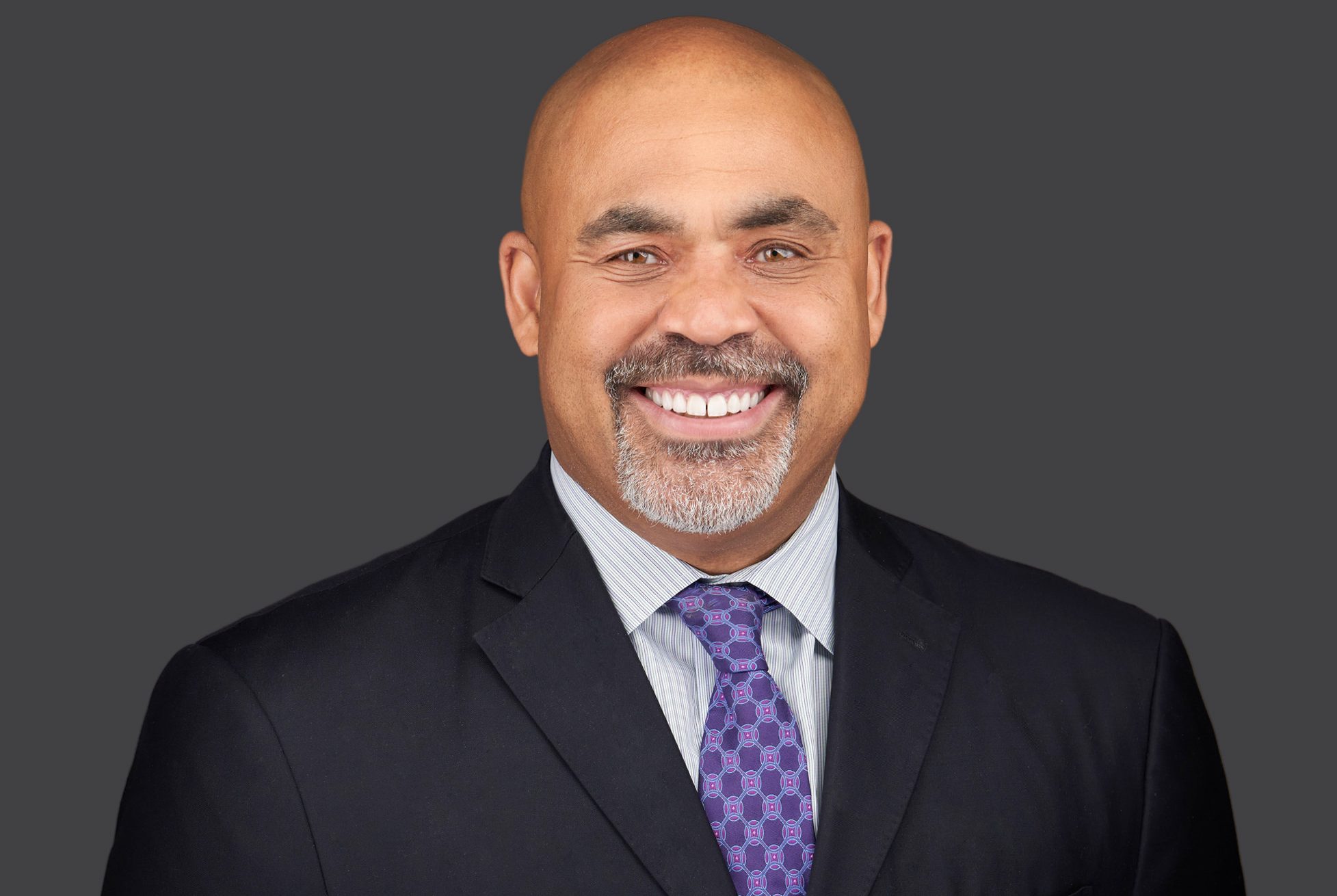
Elnardo Webster is a partner at Connell Foley LLP
