


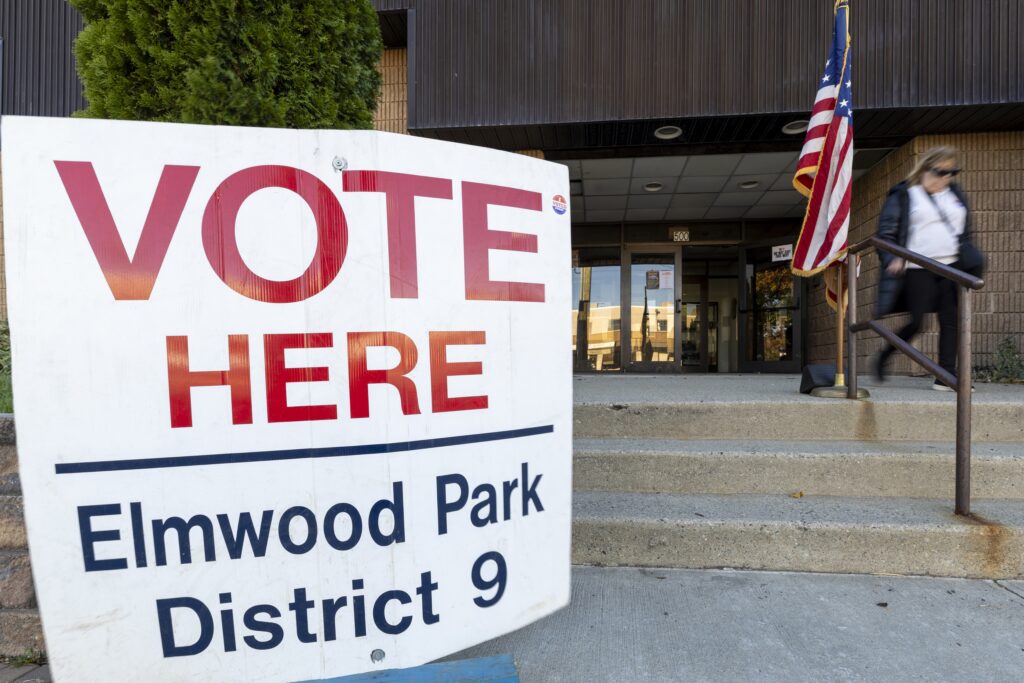
New Jersey’s highest court won’t hear a challenge to the state ban on candidates appearing on the ballot under the banner of more than one party. (Photo by Anne-Marie Caruso/New Jersey Monitor)
New Jersey’s Supreme Court declined to take up a case that challenged a state law barring candidates from running under the banner of more than one party, ending efforts to overturn the more than a century-old ban through the courts.
The Moderate Party had argued that the state’s ban on fusion voting, which allows candidates to appear on a ballot multiple times on different parties’ tickets, ran afoul of rights to free speech, association, assembly, and equal protection guaranteed by the New Jersey Constitution.
Supporters of fusion voting, which is allowed in New York, have argued that the state’s ban on the practice deliberately excludes “new ideas and new parties from the political marketplace.”
“We continue to believe that voters have the constitutional right to vote for the candidates of their choice on the party lines that best reflect their values, candidates have the right to run on the ballot lines of their choice, and political parties have the right to nominate the candidates of their choice,” said Richard Wolfe, one of the party’s founders. “The deprivation of these rights threatens our democracy and discourages voter participation.”
The party sued after Secretary of State Tahesha Way declined to list then-Rep. Tom Malinowski as its nominee for the 2022 general election. Malinowski was then the 7th Congressional District’s Democratic nominee, and state law barred him from also running as the Moderate Party’s nominee.
The U.S. Supreme Court has ruled fusion voting bans are not unconstitutional. An appellate court in February declined to depart from the higher court’s ruling, noting that language in the state’s constitution is similar enough to language in the U.S. Constitution.
The appellate judges said state interests in the administration of elections outweighed the Moderate Party’s constitutional claims. The party, the three-judge panel said, could still endorse and support its chosen candidates, but they could not place a candidate’s name on the ballot for the same office a second time.
The Supreme Court’s choice not to take up the case means that the ruling will stand.
YOU MAKE OUR WORK POSSIBLE.
