


 Listen to this article
The basics:
- Trump orders federal agencies to fast-track cannabis reclassification
- Marijuana could move from Schedule I to less restrictive Schedule III
- Change would ease taxes, banking access and research barriers
- Rescheduling would not legalize marijuana or override state laws
The White House is taking steps to ease federal restrictions on marijuana.
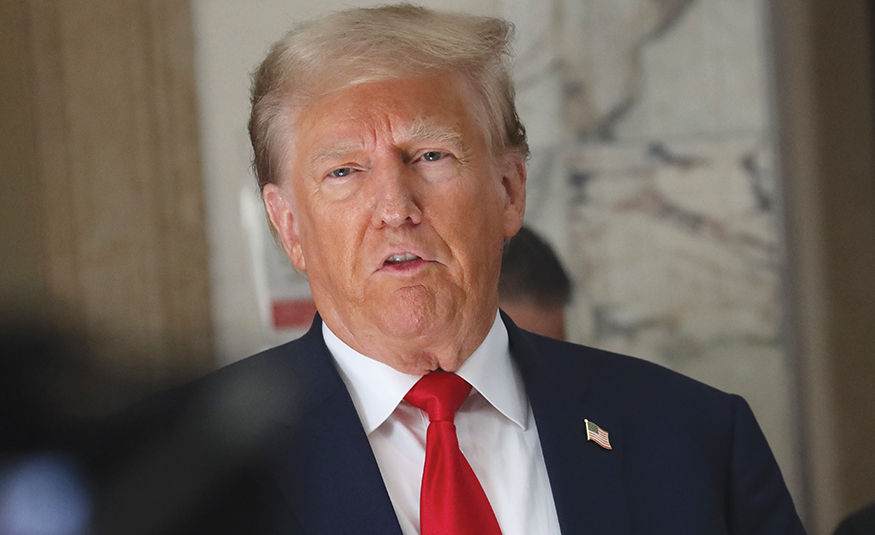
Under a Dec. 18 executive order, President Donald Trump directed federal agencies to fast-track the reclassification of cannabis under the Controlled Substances Act.
Such a change would shift marijuana out of a tightly regulated Schedule I category that includes heroin and LSD and into a less restrictive tier of substances such as Tylenol and steroids.
However, the move would not legalize or even decriminalize cannabis, meaning that the $32 billion state-regulated markets across 40 states will still conflict with federal law. Nonetheless, it would help ease federal tax restrictions on state-licensed cannabusinesses, potentially improve access to banking and significantly lower barriers to medical and scientific research. If finalized, rescheduling would be the biggest update to U.S. drug policy since 1970.
As a Schedule I controlled substance, federal law considers cannabis a drug that has a “high potential for abuse” and “no currently accepted medical use.”
Reclassifying cannabis as Schedule III would allow state-licensed ventures to deduct ordinary business expenses on their federal income tax returns, which they are currently unable to do. It might also make banks and financial institutions more willing to work with cannabis companies.
Watch more from the Executive Order signing:
Easing research restrictions
Additionally, the change would make it easier for pharmaceutical firms and academic institutions to conduct research on the drug. Currently, getting federal approval to research a Schedule I substance is lengthy process filled with hurdles and strict requirements.

Rescheduling would mean that if the U.S. Food and Drug Administration approves a drug application for cannabis, Americans will be able to get it without a doctor’s prescription.
The effort to reschedule marijuana started under President Joe Biden in 2022, when he asked federal health and law enforcement officials to take another look at how it’s classified.
By 2023, health officials said cannabis has legitimate medical uses and recommended moving it to a lower category, but the process has since slowed. While a president alone can’t change the classification, the White House can push agencies to move it forward — though legal challenges could still delay any final change.
While on the 2024 campaign trail, Trump voiced support for cannabis, “smart regulations” and ending “needless arrests and incarcerations.” Trump also said that, as president, he would favor reclassifying marijuana as a Schedule III controlled substance and “work with Congress to pass common sense laws,” including banking reform for cannabusinesses. And the Republican reiterated his belief in each state’s right to approach legalization.
In addition to ordering the Justice Department to expedite completion of rescheduling cannabis, Trump is directing lawmakers and officials to make CBD-based treatments available to seniors on Medicare, a major advanceme that could come as soon as April 2026, according to Mehmet Oz, the administrator of the Centers for Medicare & Medicaid Services.
‘Long-overdue acknowledgement’
Though reclassification reflects growing public acceptance of cannabis, some stakeholders noted that the update won’t automatically erase criminal penalties or fully legalize marijuana without additional legislative action.
Advocacy group National Organization for the Reform of Marijuana Laws said “it doesn’t resolve the growing conflict between federal and state cannabis laws, and it doesn’t provide any additional legal protections or guarantees for tens of millions of cannabis consumers or even the state-licensed dispensaries that serve them. And it does nothing for the people who have already been victimized by federal cannabis criminalization.”
The American Cannabis Collective described the EO as “a meaningful and long-overdue acknowledgment by the federal government that cannabis does not belong in the same category as the most dangerous substances known to man.”
ACC co-founder Don Murphy commented, “By moving cannabis to Schedule III, President Trump has taken a decisive step toward aligning federal policy with science, patient experience, and the realities already recognized by a majority of states.”
By moving cannabis to Schedule III, President Trump has taken a decisive step toward aligning federal policy with science, patient experience, and the realities already recognized by a majority of states.
– Don Murphy, American Cannabis Collective co-founder
Gretchen Gailey, the group’s co-founder, shared, “This decision may relieve certain federal burdens, including punitive tax treatment under Section 280E, and expand opportunities for research. However, patients, consumers, and businesses are still operating within a fragmented system that urgently needs comprehensive reform.”
She added, “We commend President Trump for using executive authority to move this issue forward and encourage Congress and federal agencies to build on this momentum with durable, bipartisan legislative solutions … As we recognize this important action by President Trump, our work is far from finished. We will continue working across party lines until patients no longer live in fear, consumers are protected, and the injustices of the war on drugs are fully brought to an end.”
‘Changes everything’
Paula Patrice, the founder and CEO of JRSY Girl Growers, a newly licensed Class I cannabis cultivator and Class 2 cannabis manufacturer coming soon to Ocean Township, said, “Rescheduling changes everything.”
In a statement, she said, “Cannabis valuation multiples that were once at 12X fell to 2X during regulatory uncertainty. Industry analysts have long predicted that rescheduling would push those multiples back to 5X–7X almost immediately. Sequoia Capital just announced $950 million dedicated to backing founders at the very beginning of their journey, before valuations explode. With today’s announcement, there’s no reason that venture capital shouldn’t flow to cannabis. I’ve been waiting to recapitalize JRSY Girl Growers. We’re actively raising our one-and-done Series A. Rescheduling now makes a dream partner like Sequoia Capital a possibility for 2026.”

New York City-based cannabis technology company and delivery platform Priscotty founder and CEO Scott Prisco said, “From a business standpoint, cannabis rescheduling is actually the most ideal outcome for the industry—especially for operators like us.”
“It restores investor confidence that’s been missing for years and provides meaningful relief from 280E, making plant-touching businesses more profitable and sustainable. At the same time, cannabis remains a controlled substance, which preserves a regulated environment and keeps massive players like DoorDash, Uber Eats, and Amazon on the sidelines for now. That balance gives smaller, compliant companies room to grow, innovate, and build real businesses without the market being overwhelmed. Rescheduling offers the industry relief without opening the floodgates—it strengthens the market without reshaping it overnight,” he said. “For companies like Priscotty and others operating in New Jersey, it provides both stability and runway, which is exactly what this industry needs right now.”
‘Historic’ announcement
Verano Holdings founder and CEO George Archos remarked, “Today’s historic cannabis rescheduling announcement marks a significant milestone and transformative policy shift that paves the way for America’s next great homegrown industry to finally reach its full potential by serving patients, creating jobs, unlocking economic growth, and reversing decades of harmful prohibitionist policies.”
Verano is the parent company of Zen Leaf, a retail dispensary with four locations across New Jersey.
“We’re grateful to President Trump for recognizing the overwhelming majority of Americans who support cannabis rescheduling, opening the door to federal reform, medical research, and normalization for an industry that employs hundreds of thousands of professionals and contributes billions of dollars in taxes and economic activity every year,” he said. “We look forward to the new opportunities rescheduling will provide cannabis businesses of all sizes, including critical banking and regulatory reforms that will unlock additional health, wellness, and economic benefits for communities nationwide.”
Curaleaf founder, chairman and CEO Boris Jordan thanked Trump “for moving forward with rescheduling cannabis to Schedule III,” calling it a “landmark moment for our industry and the country” and “the most impactful move taken around the cannabis plant since its prohibition 55 years ago.”
Ascend Wellness Holdings CEO and Director Sam Brill shared, “The move to reschedule cannabis from Schedule I to Schedule III marks a critical advancement for society, public safety, and access for patients across the United States.”
Progress … not reform
Jessica Gonzalez, an attorney and well-known New Jersey-based cannabis advocate, shared, “While the Executive Order directing the rescheduling of cannabis from Schedule I to Schedule III may be viewed as incremental progress, it should not be confused with meaningful federal cannabis reform. True reform would require de-scheduling and decriminalization, steps that can only come from Congress. The Executive Order itself does not reschedule cannabis but simply accelerates the administrative process. Any actual change in legal status will depend on agency rulemaking and implementation.”
True reform would require de-scheduling and decriminalization, steps that can only come from Congress.
– Jessica Gonzalez, attorney and cannabis advocate

Gonzalez continued, “Notably, rescheduling does not legalize cannabis federally, does not legalize state-licensed cannabis businesses, and does not legalize interstate commerce of cannabis. Sadly, it also does not address the ongoing human consequences of prohibition, including arrests, deportation risks for non-citizens, or retroactive relief for communities most impacted by enforcement. While the increased emphasis on cannabis’s medical potential and the expansion of research is welcome and long overdue, how and when meaningful research will move forward remains unclear.”
However, Gonzalez said, “This moment may open the door for state and local governments to reassess and, where appropriate, ease regulatory burdens on state-licensed businesses. State-level advocacy will be more important than ever, and collaboration between regulators, operators, and advocates will be critical to protecting state cannabis regimes from potential federal interference. As such, while rescheduling may shift aspects of risk, it does not, on its own, advance a cohesive or equitable national cannabis framework.”
Editor’s note: This story was updated at 3:52 p.m. Dec. 18, 2025, to include statements from Curaleaf and Ascend Wellness Holdings.
