

 Listen to this article
The basics:
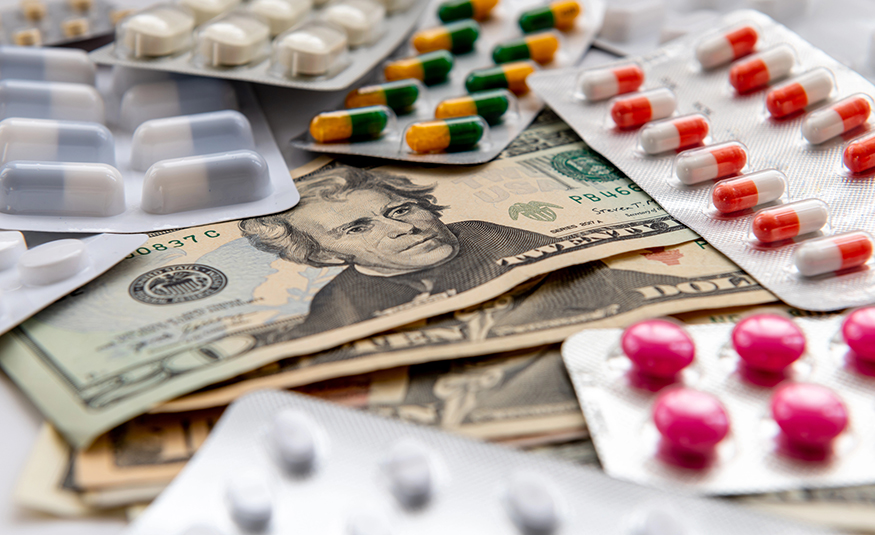
Several pharmaceutical giants boasting a New Jersey presence are among the latest companies to strike deals with the White House to lower prescription drug costs.
President Donald Trump announced agreements Dec. 19 with :
- Merck in Rahway
- Bristol Myers Squibb in Lawrenceville
- Novartis in East Hanover
- Sanofi in Morristown
Amgen, Boehringer Ingelheim, Genentech, Gilead and GSK also reached resolutions with the administration, it said.
The deals are part of Trump’s “most-favored-nation” drug pricing policy that seeks to bring down American medication cost to either the same or lower as other developed countries. Since calling on the industry in July to reduce costs voluntarily, the White House has reached deals with companies including Pfizer, AstraZeneca, Novo Nordisk, Eli Lilly and EMD Serono.
‘The greatest victory for patient affordability’

Trump reportedly described the latest batch of deals as “the greatest victory for patient affordability in the history of American health care, by far.” He also said, “The pharmaceutical companies were difficult, but they also love our country. They knew it was unfair, but they were great.”
The latest, nine manufacturers produce “drugs that treat numerous costly and chronic conditions, including Type 2 diabetes, rheumatoid arthritis, multiple sclerosis, asthma, chronic obstructive pulmonary disease (COPD), hepatitis B and C, human immunodeficiency virus (HIV), and certain cancers, among others,” the administration said.
Through the agreements, the companies agreed to sell medicines to Medicaid at “most-favored-nation” prices and launch new medications in the U.S. at that price point, the White House said. The moves will result “in billions of dollars in savings” and continue “President Trump’s historic efforts to strengthen the program for the most vulnerable,” according to the administration.
TrumpRx launch
Drugmakers also agreed to make some of their most popular drugs available at lower prices to consumers who pay out of pocket through the soon-to-launch TrumpRx.com.
Slated to go live in early 2026, the online platform will send visitors to pharmaceutical companies’ direct-to-consumer websites to fulfill orders.
For instance, Novartis agreed to slash the price of its multiple sclerosis medication Mayzent from $9,987 to $1,137. According to the White House, other offers include:
- A cut from $330 to $100 for Merck’s Type 2 diabetes Januvia
- A discount from $1,449 to $217 for BMS’ HIV medication Reyata
- A decrease from $756 to $16 for Sanofi’s prescription blood thinner Plavix
Protecting the supply chain
Some of the companies will also give key ingredients to the Strategic Active Pharmaceutical Ingredients Reserve.
Established by an executive order in August, the stockpile seeks to protect the U.S. pharmaceutical supply chain from shortages, geopolitical risk and manufacturing disruptions.
According to the White House, Merck will donate six months’ worth of “a powerful broad spectrum antibiotic,” Bristol Myers Squibb will donate six months’ worth of apixaban better known as Eliquis, and GSK will donate six months’ worth of the asthma medication albuterol.
Boosting domestic production
Plus, the companies will collectively invest more than $150 billion in projects aimed at boosting manufacturing and R&D based in the U.S. In exchange, they’ll receive a three-year reprieve on certain tariffs on branded or patented pharmaceutical imports, the White House said.
Amid pressure over the past year from the Trump administration, pharma giants have unveiled billions of dollars aimed at boosting domestic capabilities.
That has included:

According to the administration, Trump has announced deals with 14 of the 17 companies he sent letters to last summer. The Hill reported that the president told media all of those drugmakers reached agreements and that he’d unveil details on the other pacts at a later time.
According to Reuters, executives from New Brunswick-based Johnson & Johnson, as well as those from Regeneron and AbbVie, are expected to visit the White House after the holidays to help unveil the TrumpRx website.
Trump also said last week he plans to call a meeting soon with health insurance companies to “see if they get their prices down,” Axios reported.
Looking to the future
Executives at Sanofi, BMS, Novartis and Merck noted that specific terms of the agreements are confidential.
Novartis CEO Vas Narasimhan believes the pact continues the Switzerland-based pharma’s “long-term partnership with the U.S. government to advance the development and manufacturing of breakthrough treatments for patients in the United States.”
He added, “We are committed to working with governments worldwide to ensure innovation is appropriately valued and that our medicines reach the patients who need them most.”

Robert Davis, chairman and CEO of Merck, remarked, “As an American company, Merck is proud to work with the Trump administration to further secure our country’s position as a world leader in biopharmaceutical innovation. Today’s agreement marks a pivotal step in ensuring Americans can access medicines they need at lower costs.”
“For too long, global pricing imbalances have shifted the financial burden of groundbreaking research and development onto the U.S. health care system and ultimately, American patients. Merck remains committed to expanding access and improving affordability across the system,” he said.
Today’s agreement marks a pivotal step in ensuring Americans can access medicines they need at lower costs.
– Robert Davis, chairman and CEO of Merck
‘Delivering breakthroughs’
CEO of Paris-headquartered Sanofi, Paul Hudson, commented, “By working constructively with the Administration, we are moving forward with a plan that lowers medicine prices for Americans now and strengthens the vital role of the US in delivering breakthroughs into the future.”

He went on to say, “These sweeping changes to the US pharmaceutical landscape amplify the critical and urgent need for advanced economies to recognize the value of innovation and invest boldly in the future. At Sanofi, we are resolute in our mission to partner with governments worldwide to ensure innovative medicines receive the recognition they deserve, and are accessible to patients, because science and lives depend on it.”
BMS Chief Executive Officer and board Chair Christopher Boerner shared, “We are taking direct action to improve the lives of millions of Americans, ensuring our nation’s most vulnerable have access to this critical medicine at no cost.”
“Today’s agreement builds on BMS’s efforts to improve affordability, increase transparency and continue to invest in America, where we have an over 165-year history of discovering and developing life-changing medicines,” he said.
Blood thinner giveaway
During last week’s press conference, White House officials noted that BMS would provide its blockbuster blood thinner Eliquis to Medicaid for free as part of its deal. Sanofi will also list its insulin products at TrumpRx at $35 per month’s supply, they said.

Following Trump’s announcement, HealthCare Institute of New Jersey president and CEO Chrissy Buteas issued a statement.
“New Jersey’s and America’s life sciences companies have again affirmed their commitment to lowering costs for patients around the country,” Buteas said. “These companies voluntarily negotiate agreements to responsibly lower costs in ways that don’t jeopardize the discovery of future life-saving treatment and cures.”
She continued, “Our industry is doing our share to lower costs – not only with today’s announcement, but also by keeping people healthy so they avoid costly surgeries, hospitalizations and long-term care facilities. It’s time for other healthcare sectors to do their part: PBMs and insurance companies should take the billions of dollars pharmaceutical companies rebate them, and give those rebates directly to patients, as intended. We will work with all stakeholders to continue lowering costs while still curing diseases.”
