


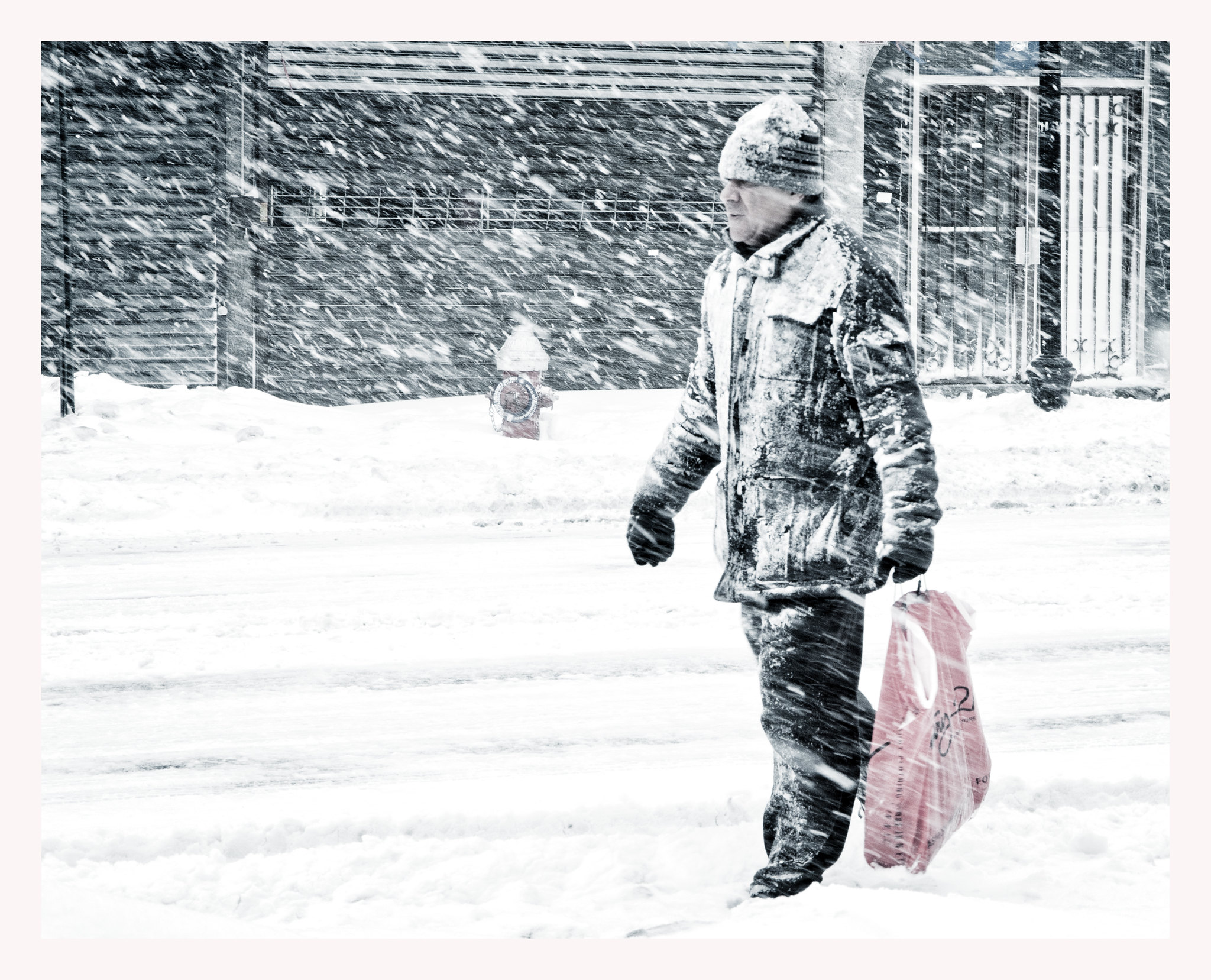
In the face of a foreseeable snow emergency during the February 2026 special congressional primary, the state acknowledges it has no clear plan, no defined protocol, and no published backup strategy to keep the election on track in a winter blizzard just as voters in the 11th district are set to head to the polls for six days of early voting commencing on January 29 and a high-stakes special primary on February 5.
“While weather and other emergencies that could cause polling locations to close are always a possibility, decisions regarding closing individual voting places due to snow would be made on a case by case basis based on the conditions on the ground, in coordination with the Boards of Elections and the state Division of Elections,” a spokesman for the New Jersey Attorney General’s office told the New Jersey Globe. “Any extension of voting would be a matter for the courts to decide.?
Voting is underway in the race for Gov.-elect Mikie Sherrill’s seat; vote-by-mail ballots were mailed on December 22.
The 11th district has parts of three different counties; Essex, Morris, and Passaic have separate boards of elections and are in different judicial vicinages. Weather conditions in Nutley and Jefferson can be entirely different; in New Jersey, it’s even more likely that two judges will come up with inconsistent rulings. Other obstacles include pollworker shortages during bad weather and polling location closures beyond the control of election officials.
“This is uncharted territory for us in New Jersey, but having an election in the middle of snow season means we will need a snow plan that all voters know and understand,” said Micah Rasmussen, the director of the Rebovich Institute for New Jersey Politics at Rider University.
The attorney general’s office noted that voters will have more than just Election Day to vote, including early voting and vote-by-mail.
“These multiple layers of opportunity help ensure that any single unanticipated disruption, such as due to emergency weather conditions, does not unduly interfere with the right to vote,” the spokesperson said.
Passaic County Commissioner John Bartlett, a voting rights lawyer who is one of the candidates on the ballot in the February 5 special election, said that election officials and the judiciary “all need to have a plan in place to deal with weather and other emergencies during early voting and Election Day voting.”
“Our campaign will be ready to help protect individual voters’ rights at the polls,” Bartlett stated. “But the relevant authorities all need to do what they can now to avoid the additional confusion that could arise from slow or inconsistent responses to inclement weather across the 11th district.”
There have been weather emergencies during winter elections in the past.
Gov. Thomas Kean suspended local school board elections in eleven counties in North and Central New Jersey in 1982 after snow created hazardous road conditions. Kean had initially declined to close the polls, causing ballots already cast to be impounded. Then, election officials realized the following week was Easter and pushed the elections back two weeks to avoid disenfranchising voters with travel plans.
In February 1978, a snowstorm led to the postponement of school elections in Monmouth County for two weeks. Heavy snow led to a record low turnout in a February 1964 school board election in Cumberland County.
The day before the March 2017 special school election, a Superior Court Judge in Essex County ordered a special school board election in Orange postponed for fifteen days due to weather forecasts of a significant snowstorm, Winter Storm Stella. This was a county-by-county issue: judges in Burlington and Monmouth also postponed elections in Shamong and Roosevelt, respectively.
In the aftermath of Superstorm Sandy, which struck New Jersey just nine days before Election Day 2012, election officials struggled to develop an emergency plan. Many polling locations had lost power or were flooded, and thousands of voters were displaced on Election Day. The state permitted some of those voters to vote by email or fax.
Still, turnout was down in Monmouth and Ocean counties, which likely cost Republican U.S. Senate candidate Joseph Kyrillos, a state senator from Middletown, a couple of percentage points in his bid to unseat incumbent Bob Menendez.
The last time New Jersey held a special winter congressional primary was on January 24, 1950, after seven-term Rep. J. Parnell Thomas (R-Allendale) resigned following a guilty plea to charges that he took kickbacks from his congressional staffers.
Harry Harper, aka “Hackensack Harry,” a former New York Yankees pitcher, resigned as state Labor Commissioner to run. Much of the Bergen GOP leadership backed Harper.
Primary day saw light rain, and the temperature was in the high 40s; nearly 6,000 more Republicans turned out in January than in the April primary.
In an upset, Harper lost the primary by 402 votes (50%-49%) to Assemblyman William Widnall (R-Ridgewood). Widnall held the seat until he lost in the 1974 Watergate landslide. This is the seat now held by Rep. Josh Gottheimer (D-Tenafly).
