


Former Governor Jim McGreevey’s bid to become mayor of Jersey City was always going to test whether a modern electorate still has attention for the political “redemption arc.” Comebacks make for compelling narratives, but they are far harder to execute than they look.
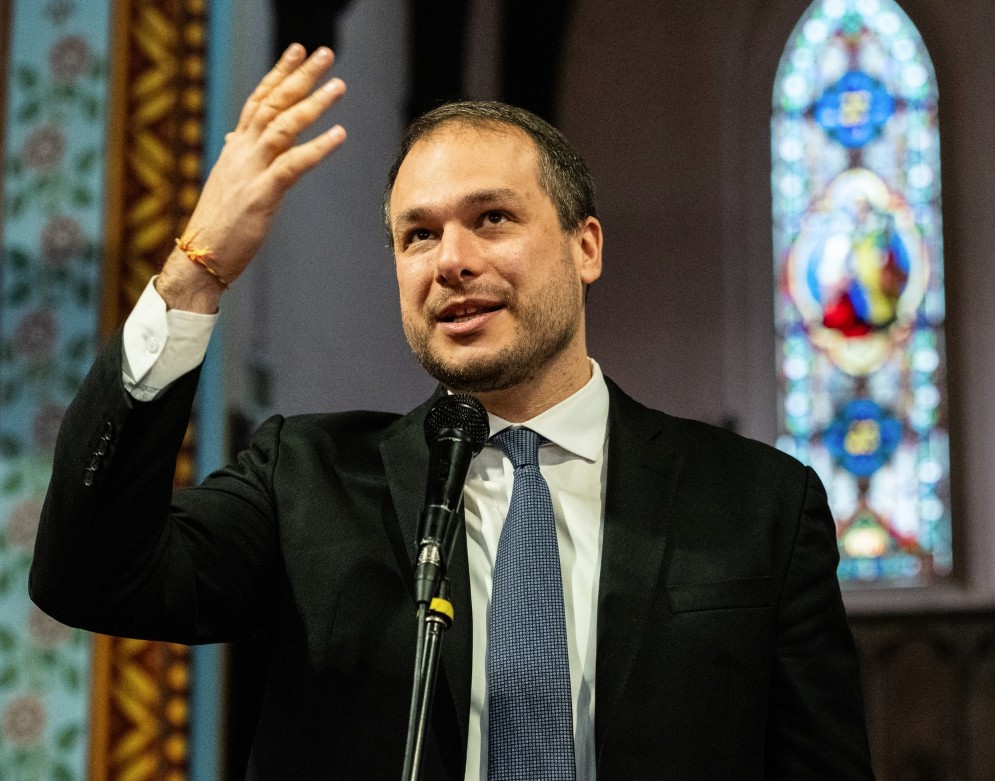
But the better story coming out of the December 2, 2025, runoff is not McGreevey’s loss. It is Councilman James Solomon’s victory—and what it signals about where Jersey City (and, increasingly, Democratic politics) is headed.
Solomon did not simply win. He won decisively, taking roughly two-thirds of the vote in the runoff and defeating McGreevey by a wide margin. That scale matters because it suggests voters were not rejecting McGreevy’s comeback; they were affirmatively choosing a future-facing agenda and a new generation of leadership.
A campaign built on policy, not nostalgia
Solomon’s message was simple and relentlessly practical: affordability. In his election-night remarks, he made the governing priority explicit— “making Jersey City affordable”—and framed his win as the start of work, not the culmination of a campaign.
That focus is not rhetorical window-dressing. In a post-election interview, Solomon described what he heard at doors across the city: anxiety that “the next rent increase or the next property tax increase is going to force me out of the city that I love.” He also argued that Jersey City’s development model has been “luxury only” for too long, and that the city must mandate affordable housing, protect tenants, and ensure development benefits residents rather than a narrow slice of the market.
Even where one may debate the exact policy mix, Solomon presented a coherent theory of the case: if government is not visibly on the side of residents who feel priced out, it will lose legitimacy—and it will lose elections.
Why Solomon connected with young progressives
Solomon’s coalition—progressives, reform-minded Democrats, and voters hungry for something other than “politics as usual”—is exactly the kind of constituency that increasingly decides competitive primaries and municipal runoffs.
In the WNYC transcript, Brian Lehrer introduces him as an “incoming progressive mayor” who toppled a comeback campaign backed by money and name recognition, and Solomon
himself embraces the progressive label while underscoring that affordability was the “laser focus” of his campaign.
That generational contrast was unavoidable: Solomon is 41, a sitting council member since 2017, and ran as a forward-looking reformer; McGreevey was attempting his first run for office since resigning as governor in 2004. In other words, this was not simply a contest of two personalities—it was a referendum on whether the future should be led by familiar figures returning for a perceived “closing act,” or by leaders who can credibly claim they are building something new.
Uniting people after a hard race
One of the most hopeful elements of the Jersey City story is what happened after the votes were counted.
The runoff could have left the city’s Democratic coalition splintered, especially given the intensity surrounding McGreevey’s comeback bid and the broader divides inside the party. Instead, the election has the potential to produce something rarer: unity after conflict.
Solomon’s victory was powered by a broad coalition that rallied around affordability and forward-looking governance.
Just as importantly, many McGreevey supporters did not disengage after the election; they largely rallied behind Solomon once the outcome was clear, recognizing that effective governance requires post-campaign unity. Continuing political warfare is an easy fools game, but building bridges and creating unity is the barometer of strong leadership.
That is what “bringing hope” looks like in practical terms: not insisting everyone agrees on everything, but creating a governing lane that people across factions can support because it is grounded in the lived pressures they share—rent, taxes, services, safety, schools.
McGreevey’s loss is a cautionary tale—about comebacks and about media eras
McGreevey ran a serious campaign focused on municipal issues, stressing that he was not seeking catharsis but practical improvements in city services and budgeting.
He also brought a record of nonprofit leadership through the New Jersey Reentry Corporation that many voters respect.
But modern politics is increasingly unforgiving to the comeback narrative—especially when the past is vivid, the electorate is younger, and the information ecosystem is brutal.
The Associated Press framed the election as Solomon “turning away” a high-profile comeback bid and noted Solomon’s repeated campaign argument that McGreevey
represented the “politics of the past.” That phrase captures the core dynamic: even when a comeback candidate is offering policy, the electorate may still interpret the candidacy as a return to an older political order—one that feels out of step with present pressures.
And this is where the Chris Hayes analysis of the 2025 elections becomes relevant: Democrats should “pass the microphone” and stop trying to win tomorrow’s electorate with yesterday’s messengers. New Jersey Globe Solomon is not merely a “new face”; he is an example of the kind of messenger and political posture that can plausibly compete for attention and trust in the current environment: direct, values-forward, and oriented toward problems voters experience daily. New Jersey Globe+1
Political comebacks may be a thing of the past
Jersey City is not the whole country. But it is a useful indicator: a diverse, high-cost city adjacent to New York, facing the same affordability pressures reshaping politics nationwide.
In that environment, the “comeback” pitch competes against a stronger—and simpler—argument: we cannot afford to go backward. When voters are worried about whether they can stay in their city, they are less interested in a candidate’s return to public life than in whether government will finally fight for their ability to remain.
Solomon’s win suggests that, increasingly, the electorate will reward candidates who (1) lead with concrete affordability policies, (2) show independence from entrenched interests, and (3) can speak credibly as builders of the next era rather than stewards of the last.
Jersey City’s opportunity
The real test begins now. Solomon inherits a city with significant cost pressures and serious governance challenges, including budgeting constraints and a development model that has produced both growth and displacement anxieties.
But he also inherits something more valuable: a mandate for change, earned through a campaign that persuaded voters, especially young progressives and reform-minded residents, that he had a plan, not just a brand.
If Solomon can convert that mandate into visible progress—affordability measures that are real, not symbolic; a development policy that produces community benefits; a budget strategy that restores confidence then Jersey City will not merely “still win” after McGreevey’s loss. It will lead.
And if Democrats elsewhere are paying attention, they may see the larger lesson: the future belongs to the candidates who can unite people around solutions, not the ones asking voters to see the past differently.
