


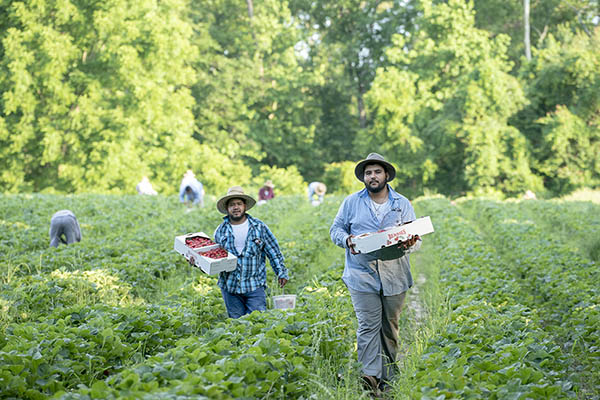
A group representing farmworkers alleges the state improperly allows them to get paid less than other workers and denies them mandated overtime pay. (Courtesy of the New Jersey Department of Agriculture)
Farmworkers who say they are unfairly excluded from overtime and minimum wage laws can continue to fight their claims in court, a state Superior Court judge said Wednesday.
El Comité de Apoyo a los Trabajadores Agrícolas, a grassroots group known as CATA that advocates for farmworkers, sued three high-ranking state officials in 2024, including the attorney general, over their claims, and in a 30-page opinion released Wednesday, Judge Patrick J. Bartels denied the state’s bid to dismiss the complaint.
Jessica Cully, general coordinator at CATA, called the ruling the “beginning of vindicating the rights of farmworkers” who have faced decades of unfair pay.
“Especially in this moment, when immigrant communities are being brutalized across the country and our local communities experience raids on a nearly weekly basis, New Jersey must begin treating farmworkers with the same dignity and respect it affords similar workers,” Cully said.
Judges hear challenge to Seaside Heights law aimed at after-prom parties
The initial complaint alleged that the state’s Wage and Hour Law, which was amended in 2019 to increase the minimum wage for most workers to $15, improperly forced farmworkers to wait longer than other workers to reach that amount. The law also exempts farmers from having to pay their workers overtime pay, which the lawsuit alleges is unconstitutional.
Under current law, New Jersey’s minimum wage for farmworkers is $14.20 an hour, and will rise to $15 beginning next year. The minimum wage for most workers rose to $15.92 on Jan. 1. The minimum wage for all workers will not be uniform until 2030.
When the Legislature amended the minimum wage law in 2019, it slowed proposed increases for farmworkers after hearing testimony from the New Jersey State Board of Agriculture president, who said farm employers would be hurt if the wage floor increased too quickly.
The plaintiffs argued that they represent a vulnerable group of workers who are often doing dangerous tasks, are paid substandard wages, largely don’t speak English, can’t access adequate health care, and cannot meaningfully advocate for their rights due to their immigration status.
State officials argued in court that the law doesn’t violate equal protection because being paid overtime or minimum wage is not a fundamental right. And they argued that farmworkers aren’t left out of minimum wage increases — they will receive them eventually, just at a slower rate.
Jeanne LoCicero, legal director at the American Civil Liberties Union of New Jersey, which joined with other groups in filing the lawsuit on behalf of CATA, said Wednesday’s ruling “brings us closer to achieving economic justice for farmworkers.”
“Farmworkers deserve a shot at making their case, and now they will get it,” LoCicero said in a statement.
GET THE MORNING HEADLINES.
