


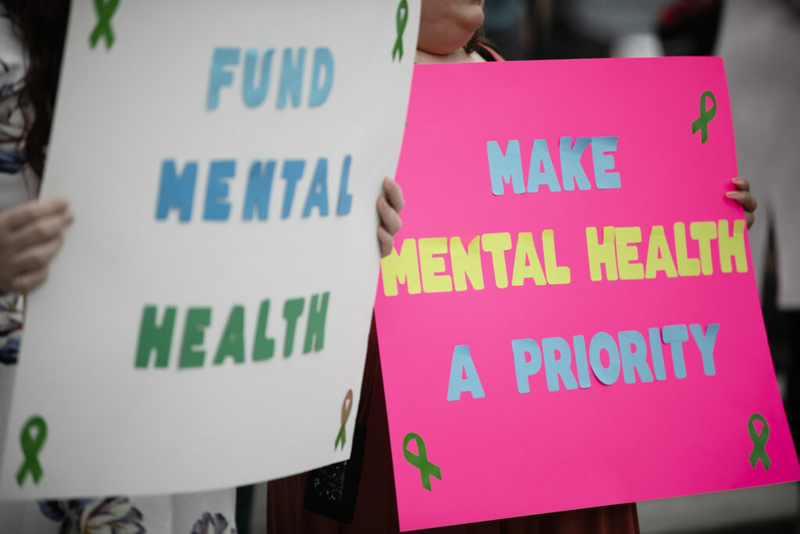
Behavioral health care needs have surged in recent years, but nearly half of Americans with mental health issues go without treatment, the report says. (Photo by Amanda Berg/Pennsylvania Capital-Star)
New Jersey has just over half the psychiatrists it needs and it faces “catastrophic” workforce shortages in psychiatric hospitals and community providers, according to a new report from a mental health advocacy group.
Behavioral health care needs have surged nationwide in recent years, but nearly half of Americans with mental health challenges and some 80% of those with substance use disorders go without treatment, said the group, Inseparable.
One reason for this is the chronic lack of psychiatrists, social workers, community health workers, and other behavioral health professionals, Inseparable said its report released Tuesday.
NJ expands harm reduction to reduce shame, stigma around addiction
In New Jersey, Inseparable’s review of federal data found there are only 53% of the psychiatrists experts say are needed to care for the state’s 9.5 million residents. More than 1.3 million people here had a diagnosed mental health condition as of 2023, according to Inseparable.
New Jersey scores higher than most other states, but even that level of potentially available clinicians doesn’t mean people can get care, said Caitlin Hochul, senior vice president of policymaker relations with Inseparable.
“There are other gaps that also exist, including insurance coverage, time or distance barriers, transportation barriers,” she said.
A 2023 report from Inseparable found that among New Jerseyans with mental health conditions, only 46% of those with Medicaid and 29% of those with commercial insurance saw a behavioral health specialist. National data shows demand for these services has been increasing for nearly a decade.
New Jersey has worked to enhance its behavioral health workforce with state agencies, business interests, and colleges investing in a variety of recruitment, training, and development programs. But advocates say more needs to be done, especially with the upcoming cuts to the Medicaid health system, which covers a large portion of the behavioral health care costs here.
Debra Wentz, the president and CEO of the New Jersey Association of Mental Health and Addiction Agencies, which represents provider groups, has warned that this funding loss will exacerbate existing workforce challenges.
“The longstanding difficulties in attracting and keeping members of the workforce in behavioral health care, substance use, and social services are about to become even more challenging,” Wentz said. “But people still need services and many more individuals will need them in the future.”
When it comes to workforce levels at psychiatric hospitals and among community providers, the shortage in New Jersey – and more than a dozen other states — is considered “catastrophic,” according to Inseparable. Staffing challenges in the behavioral health crisis system, which includes the 988 hotline and its support system, were found to be “moderate.”
Inseparable defines “catastrophic” shortages as severe enough to reduce beds or services, while “moderate” shortages impact the timeliness and availability. It examined data from the Health Resources and Services Administration to report on the psychiatrist shortages.
“That basically means that there are just such a limited number of available psychiatric beds or psychiatric providers that people are really going without care or waiting very long times to be able to get the care that they need. During that time, conditions often worsen and can really result in horrible outcomes when they’re not getting the care they need,” Hochul said.
In New Jersey, the 988 system is designed to handle mental health and substance use emergencies, and some patients who use it go to their local hospital emergency department. Inpatient care is available at four state psychiatric hospitals, plus multiple county and private facilities, and outpatient services are delivered by community-based providers overseen by the state Department of Human Services.
Inseparable’s report also recommends states expand their behavioral health workforce by enhancing education and training for clinicians and paraprofessionals, streamlining licensing processes, and creating multi-state licensing compacts, something New Jersey is seeking to do with social workers.
In addition, the report highlights the need for integrated care, facilities where patients can access mental and physical health services under one roof, something New Jersey has slowly worked to expand. Inseparable praises New Jersey’s work to grow tele-health services with higher reimbursements and notes it is one of just a few states that pays mental health providers on par, or close to, what medical clinicians earn.
“New Jersey is starting from a position of greater capacity than most states and there’s a lot of opportunities they have, like a robust university system, they’re not dealing with the huge geographic challenges that a lot of rural Western states are dealing with,” Hochul said. “That being said, there is still this huge gap of people not being able to access care.”
GET THE MORNING HEADLINES.
