


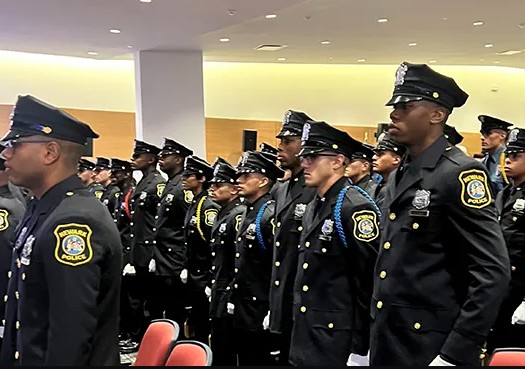
U.S. District Court for the District of New Jersey today formally terminated the consent decree governing the Newark Police Division, ending nine years of federal oversight and marking the culmination of a decade-long effort to transform the culture, practices, and constitutional compliance of New Jersey’s largest municipal police department.
The ruling ends United States v. City of Newark, a case that began with a sweeping federal investigation launched in 2011 and eventually led to a court-enforced consent decree in 2016. That decree mandated a top-to-bottom overhaul of the Newark Police Department’s procedures for stops, searches, arrests, internal discipline, community engagement, and the use of force—a task that affected every level of the department and became a national test case for modern police reform.
Federal officials law enforcement officials praised the department’s progress.
“Over the last decade, the Newark Police Division has made tremendous improvements to ensure constitutional policing and to increase community trust,” said Acting U.S. Attorney and Special Attorney Alina Habba.. “NPD remains a valuable law enforcement partner, and we will continue to work with it to reduce gun crimes, drug trafficking, and gang violence. The men and women of NPD should be proud of what they accomplished.”
Assistant Attorney General for Civil Rights Harmeet Dhillon noted that Newark’s path represents a rare success story in the world of long-term federal oversight.
“We are proud to stand by the men and women of NPD as federal oversight ends, and the court returns control of local law enforcement to the City of Newark,” stated Dhillon. “We look forward to the continued, effective policing of the City—in a constitutional manner—to protect all Americans from crime.”
The genesis of the consent decree goes back to 2011, when the Justice Department and the U.S. Attorney’s Office for the District of New Jersey jointly launched a far-reaching investigation into allegations of unconstitutional conduct inside the Newark Police Department. The probe was triggered by years of complaints from residents, civil-rights groups, and local advocates who alleged widespread misconduct, racial bias, excessive force, and a lack of accountability for officers accused of wrongdoing.
Federal investigators concluded that the Newark Police Department had engaged in a pattern or practice of unconstitutional behavior, including unlawful stops and excessive force in violation of the Fourth Amendment, acts of biased policing, retaliation against individuals who questioned police actions in violation of the First Amendment, and theft by certain officers in violation of the Fourth and Fourteenth Amendments. A federal monitor was appointed to oversee the implementation of new policies, training programs, data-collection systems, supervisory practices, internal investigations, and civilian-oversight structures.
