


OPINION
By the time most legislators arrive in Trenton, they’ve long since left the institutions their bills regulate.
Rosy Bagolie has not.
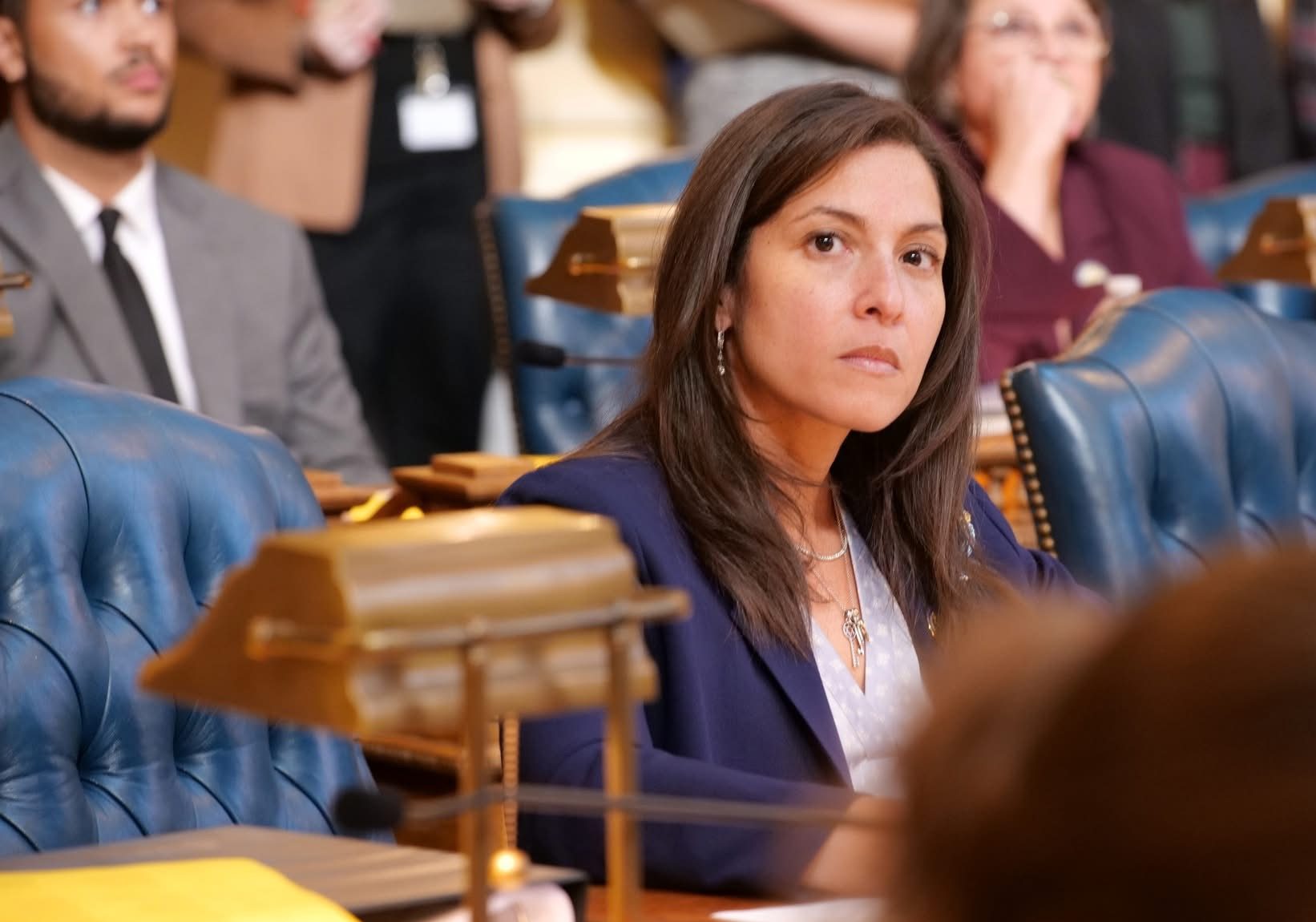
Each morning in East Newark, Bagolie greets students at the door of the borough’s only public school, supports teachers in classrooms, and manages the day-to-day realities of running a district with limited resources and constant demands. Later, she turns to her role in the New Jersey General Assembly, where she helps shape education policy that reaches far beyond a single building.
That overlap is not symbolic. It is increasingly central to how Bagolie legislates, and to why her latest bill is drawing notice well beyond her district.
This week, the Assembly passed A4882, legislation Bagolie sponsored alongside Assemblymembers Cody Miller and Carmen Theresa Morales addressing the growing presence of cell phones and other internet-connected devices in classrooms. The measure directs the Department of Education to issue statewide guidelines, while leaving implementation and enforcement decisions to local school boards.
It is notably not a statewide cellphone ban, nor does it mandate a single enforcement model. Instead, the bill reflects a recognition that technology in schools has outpaced policy, and that rigid, one-size-fits-all rules are unlikely to hold in a fast-changing digital environment.
Bagolie’s perspective on the issue is practical, not abstract.
“As both a legislator and a longtime school administrator, I’ve seen firsthand how constant notifications, group chats, and social media disrupt instruction and heighten anxiety,” she said. “This isn’t something I discovered in Trenton. It’s something I confront every morning.”
While cell phones dominate public debate, A4882 also anticipates a broader ecosystem of internet-enabled devices now entering classrooms, including smartwatches, AI-enabled earbuds, and wearable technology capable of silent messaging, recording, and real-time content overlays. Rather than legislating individual devices, the bill establishes a framework designed to adapt as technology evolves.
That balance mirrors Bagolie’s approach in East Newark.
The borough’s single-school district operates with a lean administrative structure that would be unusual in most New Jersey communities. Bagolie serves simultaneously as superintendent, principal, and Learning Disabilities Teacher Consultant, roles typically spread across multiple administrators.
Despite that, the district has maintained balanced budgets while negotiating a new teachers’ contract that included raises and expanded benefits. The school itself has undergone gradual, cost-conscious renovations, and staff morale has stabilized.
“You can feel it the moment you walk in,” said Talia D’Arco, a longtime educator at the school. “The building shines, the kids are proud to come to school, and the teachers finally feel heard.”
Bagolie, a certified school business administrator, is one of the few superintendents in the state with formal training in both educational leadership and fiscal management. That combination has shaped her legislative priorities since entering the Assembly.
Representing the 27th Legislative District, including Clifton, Livingston, Millburn, Montclair, Roseland, and West Orange, Bagolie serves on the Assembly Education Committee and the Financial Institutions and Insurance Committee. Beyond A4882, she has backed legislation to modernize teacher certification, expand insurance protections for special-needs adults, and strengthen pension and utility assistance programs.
The throughline in that portfolio is consistent: reducing friction in systems where failure carries real consequences for families.
Bagolie also credits cross-chamber collaboration for the bill’s progress, noting the role of Paul Moriarty in shepherding A4882 through the Senate.
The approach appears to be resonating in a Legislature increasingly grappling with how to regulate fast-moving technologies without locking schools into outdated rules.
Bagolie’s background informs that conversation. An immigrant who arrived in New Jersey at age seven without speaking English, she rose from bilingual teacher to superintendent before entering elective office. Today, she remains one of the few lawmakers who still runs a school while voting on education policy.
In a State House often criticized for its distance from classroom reality, that proximity stands out.
Whether A4882 becomes a broader template for education policy remains to be seen. But its passage suggests that lawmakers who legislate close to the consequences of their decisions may be gaining ground.
In Bagolie’s case, that proximity is not rhetorical. It is operational.
Ricky Bagolie, a partner at Bagolie Friedman, a Jersey City-based law firm, is the husband of Assemblywoman Rosaura Bagolie (D-Livingston).
