


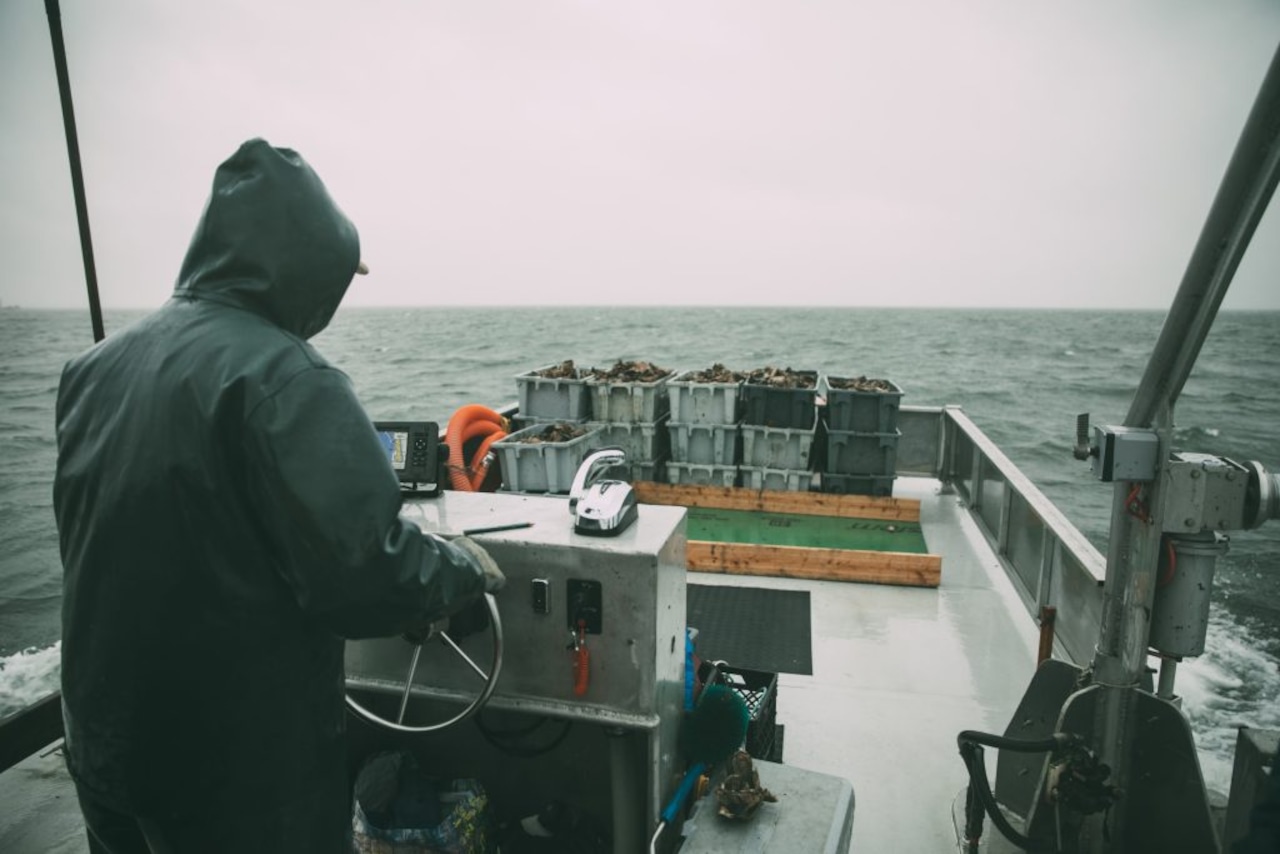
Nine shellfish aquaculture producers deployed about 435,000 baby oysters across two restoration reef sites in the Barnegat and Great Bay region in November as part of an ongoing conservation initiative.
The producers planted oyster spat on shell at the Tuckerton Reef and Mill Creek Reef on Nov. 19, despite windy and rainy conditions.
The reefs are managed and monitored by Stockton University, according to a statement from the Ocean County Soil Conservation District.
The planting marked the second deployment for the Coastal project, a partnership between local aquaculture producers and conservation agencies.
The project has funding for four total plantings and began planning efforts in 2020.
The oysters, averaging 1.5 inches in length, were grown on the producers’ aquaculture leases since June before being transferred to the restoration sites.
The spat settled on recycled shell material.
Planting locations were marked with buoys by Nate Robinson of the Stockton University Marine Field Station and Kristin Adams, a conservation specialist for the Ocean County Soil Conservation District and aquaculture specialist for the USDA Natural Resources Conservation Service in New Jersey.
The approach of growing the oysters on farms for one season before deployment aims to improve reef survival rates.
The larger, more three-dimensional spat on shell reduces the risk of burial by sediment and lowers predation pressure, according to the the soil conservation district statement.
Students and staff from the Stockton University Marine Field Station monitor the reef sites in spring and fall.
The Tuckerton Reef was established in 2016, while the Mill Creek Reef was established in 2022.
