


The basics:
- Priscotty expands NJ cannabis delivery in Hoboken, Jersey City and Red Bank
- Startup partners with six dispensaries and more locations launching soon
- Hybrid car and e-bike model supports flexible, local contract driver jobs
- Company pays $10 per delivery plus 100% of tips to drivers
As Priscotty scales across New Jersey, the cannabis delivery technology company’s fleet of contract drivers are literally helping steer the startup’s growth. Since its local debut last year via a partnership with Blue Violets Dispensary in Hoboken, the service has expanded to provide free, on-demand delivery from four more dispensaries: The Station and Hudsonica in Hoboken; Bay Street Greenery in Jersey City; and Frosted Nug in Red Bank.
Priscotty also has at least a half dozen more locations contracted and preparing to launch shortly, such as Botera-branded shops in Union and Harrison.
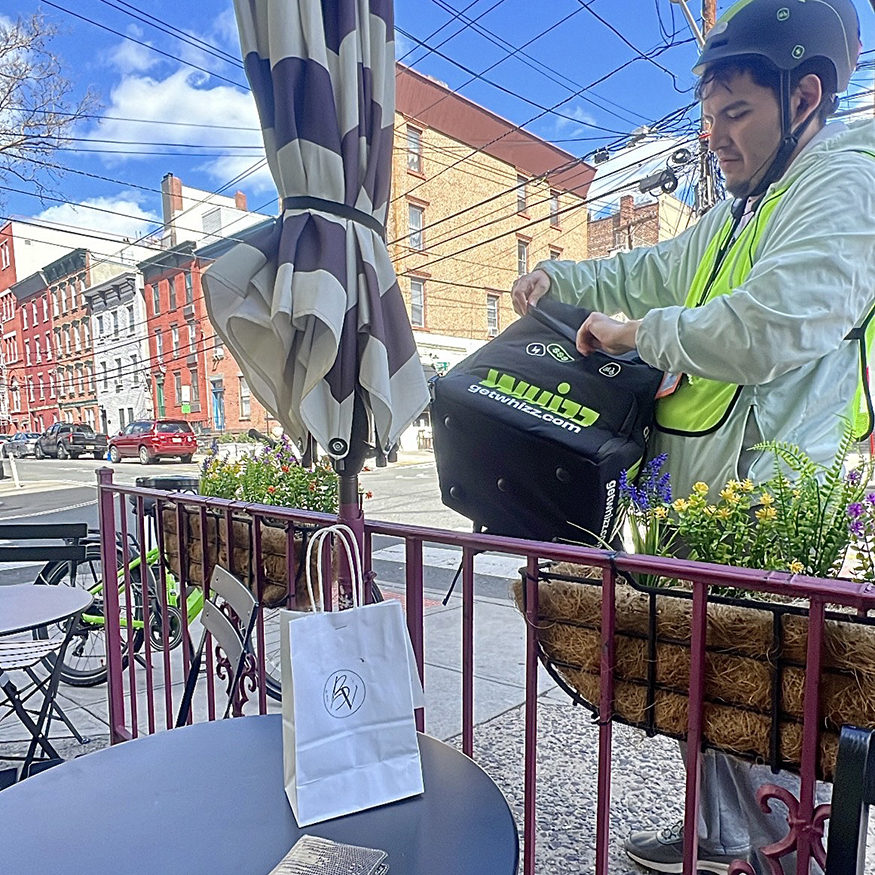
To support those markets, Priscotty has a growing network of local delivery contractors, including career-transitioners and individuals re-entering the workforce.
Through a hybrid delivery model that employs both vehicles and e-bikes, the company has created flexible roles that allow people to control their time, stay active, and earn a living without being tied to a desk or traditional office environment.
In the U.S., contract delivery gigs are becoming more common as app-based platforms expand to meet consumer expectations for on-demand services. The growth mirrors a bigger move toward flexible work, especially in logistics and last-mile delivery, where companies lean on independent drivers to scale.
Management consulting firm McKinsey & Co. estimates that 36% of Americans – roughly 58 million people – do some kind of independent work, showing just how central contract labor has become to platform expansion.
Get rolling
Scott Prisco, founder and CEO of Priscotty, said, “People today are looking for work that gives them flexibility, allows them to make a living and gives them a sense of purpose. They want control over their time, they don’t want to feel stuck, and they want to be part of something new that’s growing. That’s what we’re trying to provide.”
Founded in 2022, Priscotty enables state-compliant last-mile delivery for licensed dispensaries while running its own virtual retail model. Built on proprietary logistics technology and regulatory expertise, the platform seeks to streamline operations for dispensaries, customers and delivery drivers.
Aside from helping local businesses flourish and navigate the maturation of e-commerce in cannabis, Priscotty strives to create job opportunities in the local economy.
“As we’ve scaled, Priscotty has become a quiet economic engine for the community. We’ve onboarded a wave of local delivery contractors … giving them direct access to a fast-growing, regulated industry and stable earning opportunities without the gatekeeping of traditional hiring,” Prisco said.
“Our hybrid delivery network of cars and e-bikes has created dozens of flexible roles that empower people who need income right now, without the barriers that come with most sectors. Many of our contractors say Priscotty was their first job in the U.S., or the bridge they needed to get back on their feet,” the cannabis advocate and entrepreneur explained.
Back home
After starting out with dispensaries in New Mexico, Priscotty turned its attention to Prisco’s native New Jersey and New York.
“The goal was just to prove it with Blue Violets. And we saw what we liked, expanded in the Hoboken area and expanded to Jersey City. Then, we started figuring out what other areas we can target,” said Prisco, who grew up in Bridgewater.
“It all fell into place. And, we actually have a lot more demand than we can handle … But for us, it’s more about creating a solid foundation and not expanding crazy too quick. We’ve done that in other markets when we first launched back in 2022 and learned our lesson. So, it’s more about creating a solid infrastructure and then driving deliveries in those places and slowly encompassing more areas,” he said.
“As New Jersey was rolling out, they were taking forever to get going … so I was like, ‘Alright, well I’m not going to sit around and wait for two years for this to happen.’ So, we launched in New Mexico, a place I previously lived, because their program got rolled out a lot quicker,” Prisco said.
“From a business standpoint, it was little bit different model. We ran more of a DoorDash model where we took on a lot of different dispensaries in the same area, and then we quickly realized – one, they all have the same products; and two, more customers just equal more operational headache,” he said.
‘The right partners’
“And more tech infrastructure was needed, which obviously costs money and takes time,” he explained. “So, when we launched in New Jersey, it was like ‘Alight, let’s find the right partners and the right areas that we want to target.’”
Now, Priscotty operates two interconnected business models that are both built on proprietary delivery technology and logistics infrastructure.
Along with enabling dispensaries to offer delivery, Priscotty has a virtual storefront that allows customers to place orders directly through the platform. Then, the order is filled using inventory from partner dispensaries acting as localized fulfillment hubs.
Prisco believes the dual-structure allows his venture to tailor delivery coverage based on efficiency, demand density and community needs — rather than relying on a fixed, one-size-fits-all radius. Those zones are set on a case-by-case basis and can vary widely, from a roughly 10-mile radius in Monmouth County to more compact coverage around dense urban markets like Hoboken.

‘How hard can it be?’
When it comes to the qualities that Prisco seeks in a partnering dispensary, he said the biggest is “someone that understands the tech stack and cannabis, understands their flows and sees value in delivery.”
“There’s a wide range of scale when it comes to dispensaries and their management and stuff like that. Some of these dispensary owners are first-time business owners. They come from the black market. They’ve never ran a legit retail business before. So, we kind of look for someone who understands the retail business and has done retail in other realms,” he said.
Since the state began accepting applications for wholesale, distribution and delivery service licenses in September 2023, a number of dispensaries have begun offering customers the option of having their cannabis delivered directly to their doorstep.

While cannabis delivery may sound simple, it’s anything but, according to Prisco.
Running a compliant program requires juggling multiple tech systems and a heavy operational lift. And many dispensaries are still trying to get their in-store business figured out, let alone delivery, he said.
While delivery can add revenue, Prisco said saturated markets, tight margins and unfavorable taxes can make it difficult for many dispensaries to manage it internally.
“I think people think, ‘Oh yeah, I’ll just start a delivery program. How hard can it be?’” he said. “But when you actually look at what it takes to run a compliant delivery program that has a great user experience where customers are going to order again and it’s going to make an impact, drive the revenue and drive the recurring orders the way you want them to, it is not easy.”
“There’s a lot of boxes to check and delivery seems simple in theory, but … there’s a lot of little components that go into it. And a lot of times these dispensaries just don’t have the knowledge and a lot of times they don’t have the staff to handle it,” he went on.
“A lot of these dispensaries that … have tried to create their own delivery programs in-house have realized it’s not really their core competency,” Prisco said.
An electric advantage

In cities like Hoboken and Jersey City, Prisco said e-bikes are “a major advantage.”
“Drivers aren’t paying for gas or vehicle maintenance,” he explained. “And, many dispensary partners allow drivers to charge e-bike batteries onsite, which further reduces expenses.”
“E-bikes also allow for higher throughput in dense areas, sometimes 4–5 deliveries per hour, whereas car-based delivery in suburban New Jersey is naturally more spread out,” Prisco commented.
He noted that Priscotty’s partnerships with The Station in Hoboken and Bay Street Greenery in Jersey City have been especially successful because both dispensaries had existing car-based delivery programs.
“So, the e-bike was very attractive to them, and they already have a solid foundation of deliveries. They were doing about 15 to 20 deliveries a day. Contracting with someone like that who already has that infrastructure. where we can come in and just make it more efficient and apply our technology, it gives the drivers a great starting point,” he said.
A more sustainable model
Prisco pointed to the unique economics of cannabis delivery as a key factor in building a more sustainable gig model.
“Cannabis is a higher-value product than food delivery, which means there’s more margin per transaction,” Prisco said. “That gives us the ability to pay our drivers more than many food-based platforms, where there’s often very little meat left on the bone. It allows us to take the flexibility people like about gig work and apply it to a model that actually works financially for them.”
According to Prisco, drivers are paid $10 per delivery and earn 100% of tips from customers.
Unlike food delivery models, Priscotty keeps delivery zones relatively tight, so there’s less wear and tear on vehicles because contractors aren’t traveling “excessive distances,” he said.
Drivers are really the foundation of the business. Keeping them happy and making sure they’re taken care of is key.
– Scott Prisco, founder and CEO, Priscotty
“In terms of earnings potential, depending on the location and order flow, drivers can often complete two to three deliveries per hour. At $10 per delivery plus an average of $6 in tips, that can equate to up to $48/hour in strong periods. While that isn’t guaranteed every hour, we have had hours where drivers earned $50-plus,” Prisco said. “And our focus is on making that level of consistency more common as order volume increases and logistics become more efficient.”
“We designed this model intentionally. I personally did DoorDash/Uber early on in my career and once you factor in gas and long-distance driving, it’s very difficult to earn sustainably. Our goal is to create a model where drivers can actually generate meaningful value for themselves and their families,” Prisco shared.
“Drivers are really the foundation of the business. Keeping them happy and making sure they’re taken care of is key,” he said, adding, “You can have customers, technology and partners, but without drivers, this business doesn’t work.”
‘The modern-day milkman’
“Cannabis has proven to be more of a ‘Need it, want it now’ product. So, it’s not something that you buy on Amazon and then you get delivered tomorrow. When people want to smoke, they want it now,” Prisco said. “So, the ability to order product and get it delivered in 30 minutes, that’s a big thing. And having that flexibility to be able to schedule it for later when you’re home from work, is a huge thing.”
“There’s a lot of things that go into it, but it just really comes down to how we treat the flow, how the bud vendors are interacting with the customers and then how the drivers are interacting with the customers,” he said. “Our goal is the user experience in mind — for the end consumer and making sure they feel safe when someone comes up to their door. So, we aim for a different driver profile in that sense and the higher delivery pay allows us to command that.
“Having the right drivers that show up and are professional is so important … You want someone that’s going to make you feel comfortable, you’re going to vibe with and you’re going to like to see,” he said. “It seems simple, but these people are going into your homes and they’re not just leaving a package, so you want the right people doing that.”

Prisco went on to compare his delivery drivers as “the modern-day milkman or mailman.”
“Kind of like how it used to be when you knew your mailman and it was a friendly relationship,” said Prisco, adding, “Some of our drivers even get gifts from people.”
“There’s many things that add to that user experience that we implement and see that works, but they all line up to a customer ordering again in a successful delivery program,” he said.
Keeping both drivers and products safe is central to that mission, too, Prisco said.
“I think the good part about this is the food delivery businesses have already kind of paved the way. So, it comes back to the experience and then the training that we provide so that these drivers feel empowered and feel safe,” he said. “And then as far as the product goes, as part of our SOPs [standard operating procedures] we have different checks in the process where the dispensary budtender and the driver is verifying that the order is correct. And then it’s getting placed in the bags, stapled shut and stickered shut.”
“So, there’s accountability in the process of the operation so that you don’t have that issue where you go to a dispensary and the product’s missing or the bag’s tampered with … It goes back to who you choose as your drivers. And then it goes back to the procedures you put in place and how those orders are going out the door,” he said.
A day in the life
Nearly all of Priscotty’s contract drivers live near the dispensary they deliver from.
Prisco said, “We work with them and put a schedule together every week based on our driver’s availability. They’re not showing up at the dispensary at 8 a.m. They’re able to stick to their routine and stay at home until they get their first order. Then, they’re able to make that delivery when they get their order and go back home or take care of other things that they’re doing.”
“A lot of our drivers have kids and families, so it provides them the flexibility … They’re able to do their life, handle other work or take care of their families and have that control over their day, which is, I think, appealing,” he said.
After starting out in November 2025 doing cannabis delivery via e-bike for Priscotty, Richard Samuels said, “Most days, it honestly doesn’t feel like work.”
“It fits my lifestyle perfectly. I’m a big proponent of cannabis and personal electric vehicles, so this is the ideal flex gig for me,” he said. “On top of that the money is surprisingly good and lastly tremendous schedule flexibility and no dress code whatsoever … makes this perfect for me.”
It fits my lifestyle perfectly. I’m a big proponent of cannabis and personal electric vehicles, so this is the ideal flex gig for me.
– Richard Samuels, Priscotty contract driver
Before Priscotty, Samuels was doing e-bike deliveries from a nearby Crumbl Cookies shop. Originally from Long Island, Samuels now lives minutes away from Bay Street Greenery in Jersey City.
“A key benefit of this job is that I don’t have to actually be there, as the app notifies whomever is assigned to cover the deliveries for a particular time slot when there’s pending delivery/deliveries,” he said. “And considering I live so close by I can easily get there within minutes of receiving such alerts allowing me to remain at home.”
A working model
Currently, Priscotty has about a dozen delivery contractors to handle its six partner dispensaries. Prisco expects to bring in about two to three drivers for each new dispensary that comes online.
Looking ahead, Prisco said hiring a full-time dedicated delivery workforce could be a possibility for the company.
“I think that, ultimately, we’re going to do whatever we can to provide the best experience. And sometimes I think that you definitely get a lot better buy-in when you have waged employees. It would be a little bit of a different business model, and we’d have to do some things on our end to adjust for that, but it’s not out of the picture,” he said.
“Right now, what we’re doing is working. I think ultimately at the end of the day, it provides people flexibility. If they can make the money they want to make and it’s working. Why change the infrastructure? But maybe someday; I wouldn’t put it out of the picture. We’re going to do whatever we need to do to make sure the business is stable and we can provide a good service,” he said.
According to Priscotty, its goals center on increasing order volume, improving logistical efficiency, putting more money into drivers’ pockets and delivering more value to dispensary partners.
“That’s the growth process we’re actively working through, and we’ve already seen strong progress in several markets,” he said.
“On the driver model, our focus going into the new year is very much on driving more volume so we can continue moving driver pay higher and more consistently along that scale. We’ve already seen that the model works — we have real data showing strong hourly outcomes during higher-volume periods, and as order flow becomes more,” Prisco said.
The year ahead
As for New Jersey’s nearly four-year-old legalized adult-use market, Prisco is optimistic about what 2026 will bring.

NJBIZ 2026 Outlook
Our editorial team surveyed New Jersey business leaders on their early thoughts for the new year, including the new administration in Trenton, biggest challenges and opportunities and much more. Find the Q&A’s here.
“My primary hope for New Jersey’s cannabis industry is federal rescheduling – specifically moving cannabis from Schedule I to Schedule III – as early as possible in the new year. That shift would materially improve access to capital, normalize banking and tax treatment, and further solidify cannabis as a legitimate, regulated industry,” he said.
At the state level, Prisco expects New Jersey “to continue enforcing its regulatory framework, particularly around intoxicating hemp products being sold outside the licensed system.”
“Adult-use operators have gone through an extensive and costly licensing process, and stronger enforcement will help protect that system by redirecting consumer demand back into the regulated market,” he remarked. “Given the structure of the illicit market today, this shift is likely to benefit licensed delivery and service providers by allowing that demand to be absorbed in a regulated, tested and consumer-safe manner.”
Along with a relatively stable retail cannabis pricing rate in New Jersey, Prisco anticipates “continued consolidation across the state, including acquisitions of smaller operators and increased M&A activity as scale and operational discipline are rewarded.”
“Overall, these trends should increase the long-term value of licensed cannabis businesses in New Jersey and create a stronger foundation for responsible expansion within the state and beyond,” he said.
The post Priscotty scales NJ cannabis delivery with local drivers appeared first on NJBIZ.
