


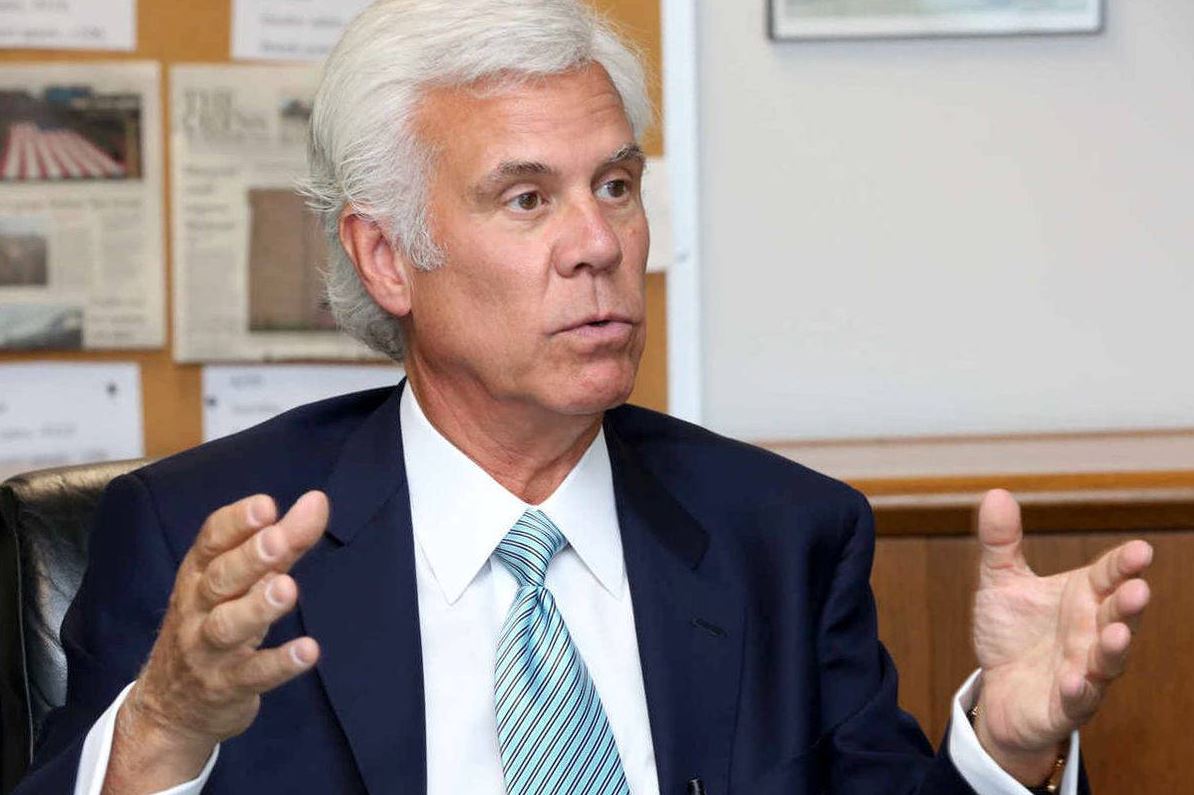
Just months after his charges were dismissed, not only did the State file an appeal, but George Norcross is the subject of a new, unrelated legal attack. The onslaught brought against him makes it obvious that Norcross is the subject of the same political lawfare Democrats accuse Republicans of practicing, except that in NJ, it is Democrats attacking Democrats.
This time around, the insurance brokerage founded by Norcross, Conner Strong & Buckelew, faces allegations of conflicts of interest in its handling of municipal health insurance funds. The allegations made by the New Jersey Office of the Comptroller are written to appear significant. However, much like the Norcross criminal indictment, the report appears politically motivated and legally unsupported.
Comptroller’s Report
On September 9, 2025, Acting Comptroller Kevin Walsh issued a report alleging that Conner Strong & Buckelew (CSB), violated disclosure laws and improperly influenced public contracting processes for health insurance funds. According to the OSC report, CSB and a related entity, PERMA, have effectively gained control over public health insurance funds (HIFs), which allow school districts, municipalities, and other government entities to band together to jointly purchase health benefits insurance at lower costs.
“CSB and PERMA purport to be separate, independent entities linked only by a parent company. CSB generally serves as program manager, acting as broker and underwriter for insurance funds, while PERMA is contracted as the administrator, managing day-to-day operations for HIFs. … [The report] found, however, CSB and PERMA function as one entity, with PERMA under CSB’s supervision, sharing leadership and employees,” the OSC maintains.
The report conspicuously omits to state that the current operations that allow PERMA and CSB to operate the way they do have been explicitly approved by the DOB and DCA repeatedly and that the performance of the funds is subject to regular audit.
According to the OSC, it discovered the disclosure violations and conflicts of interest during a “routine” review of proposed public procurements by three HIFs — the Schools Health Insurance Fund (SHIF), the Southern New Jersey Regional Employee Benefits Fund (SNJHIF), and the Municipal Reinsurance Health Insurance Fund (MRHIF). By law, OSC is required to review major proposed public procurements to ensure compliance with laws and regulations.
In addition to publishing its report, the OSC has made recommendations and referrals to the Department of Banking and Insurance, the Department of Community Affairs, the Office of the Attorney General’s Division of Consumer Affairs and School Ethics Commission. It also ordered the three HIFs to submit corrective action plans within 60 days.
Response to the Report
Not surprisingly, CSB has strongly rebuked the claims. In a statement, CSB and PERMA repudiated the comptroller’s findings and made their own allegations of bullying and intimidation, breaching legal protections, deceptive practices, and obstructing the procurement of contracts during the investigation.
“The OSC’s report falsely claims the Funds operate with little oversight, insulting the work of volunteer Fund Commissioners and exposing the OSC’s bias,” the companies said. “What began as a routine review of RFPs for TPA services secretly morphed into a full-scale fishing expedition, complete with fabricated interpretations of state law.”
CSB and PERMA have also called for the appointment of a special counsel to review whether any referrals by the OSC to criminal and civil enforcement agencies during Walsh’s tenure “improperly contained or relied on attorney-client privileged information.”
“As the State Health Benefit Plans collapse, the OSC has instead sought fit to attack a solution that has proven to be successful for over 3 decades. As you will see, the OSC does not understand what Funds do. Their positions are oftentimes at odds with current law, inserting personal preference where State statute should apply,” the companies added.
Much like the allegations in the Norcross indictment, the rules and regulations governing HIFs are extremely complex, with numerous entities involved. Moreover, there is a very important difference between violating the law and taking advantage of business opportunities. Norcross emphasized this in his statement, as did the chairs of several HIFs.
“The recently issued report from the NJ Office of the State Comptroller makes false and unfounded accusations regarding health insurance funds,” the HIFs said. “These allegations reflect a fundamental misunderstanding of how joint insurance funds operate and why they have been successful for New Jersey taxpayers.”
At this point, the OSC report looks like a politically motivated fishing expedition. According to the OSC, its past audits of municipalities and school districts have “repeatedly documented how insurance brokers have built-in conflicts of interest.” So why is CSB exclusively being targeted with AG referrals and other enforcement? Would it not be more effective to overhaul the regulations governing HIFs or call on the New Jersey Legislature to expand oversight over the marketplace?
