

The basics:
- FTC clears key antitrust hurdle for $44.8B McCormick-Unilever deal
- UK regulators set Nov. 11 deadline for initial decision
- Unilever shareholders would own 65% of combined company
- McCormick targets mid-2027 closing
McCormick & Co.’s proposed $44.8 billion combination with Unilever’s food business has cleared a key U.S. antitrust hurdle, however it remains under review by regulators across the pond.
The Federal Trade Commission granted early termination of the waiting period under the Hart-Scott-Rodino Act Oct. 5, allowing the deal to move past that procedural requirement. Trade publication Food Navigator noted the proposal must still secure McCormick shareholder approval and satisfy other closing conditions.
The move comes weeks after the U.K. Competition and Markets Authority announced it needs more time to determine whether such a tie-up would substantially reduce competition. The CMA set a Nov. 11 deadline to issue its Phase 1 decision. If there are concerns, the regulator could launch a more in-depth Phase 2 investigation, it said.
Media representatives for Unilever and McCormick did not immediately respond to a request for comment.
Deal details
Under the terms of the deal announced in March, Unilever and its shareholders would own 65% of the combined company, while McCormick shareholders would own the remaining 35%.
The companies are targeting completion in mid-2027, subject to regulatory clearances and other closing conditions. If the transaction goes through, it would create a combined business under the McCormick name that is valued at about $65 billion with about $20 billion in annual revenue, the companies have said.
Considered one of the largest consumer packaged goods companies in the world, Unilever’s portfolio includes powerhouse brands like Dove soap, Axe body care and Vaseline petroleum jelly.
Besides Hellmann’s, its food business also includes Knorr bouillon, soups, seasonings, sauces, pasta and rice; and Marmite spreads. While the unit represented a quarter of the company’s total sales in 2025 ($14.91 billion), the division is growing more slowly than Unilever’s overall business.
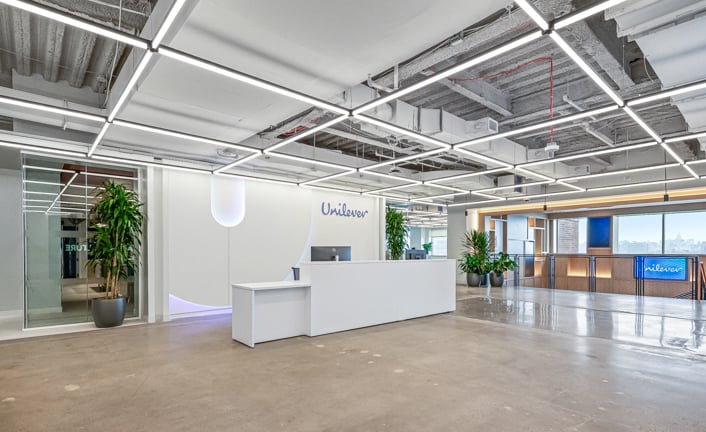
Headquartered in London, Unilever has its North American base in Hoboken. Prior to relocating to its brand-new office last year at Waterfront Corporate Center, the company spent decades in Englewood Cliffs.
A global leader in flavor, McCormick makes, markets and distributes herbs, spices, seasonings, condiments and flavors to retailers, food manufacturers and foodservice businesses. The 137-year-old company’s most popular brands are McCormick, French’s, Frank’s RedHot, Old Bay and Stubbs.
Following the deal close, McCormick would remain based in Maryland and continue to be led by CEO, President and Chairman Brendan Foley. The companies have said executives from both Unilever and McCormick are expected to serve in key leadership roles. They also said Unilever will appoint one-third of the board.
Additionally, McCormick will also create a secondary listing in Europe and establish an international headquarters in the Netherlands, where Unilever has had a long-standing presence, the companies said.
If the two unite, it would create one of the world’s largest flavoring and food products companies. After the $100 billion merger that created Kraft Heinz in 2015, the Unilever-McCormick deal would rank as the second-largest food transaction in history, Reuters reported.
The post $44.8B McCormick-Unilever food deal clears US antitrust hurdle appeared first on NJBIZ.
