


The basics:
- NJBIZ panelists cite grid capacity, insufficient energy generation as obstacles
- Proposed $50M Gloucester County solar project scaled back due to grid limitations
- Panelists call for faster permitting, all-of-the-above energy strategy
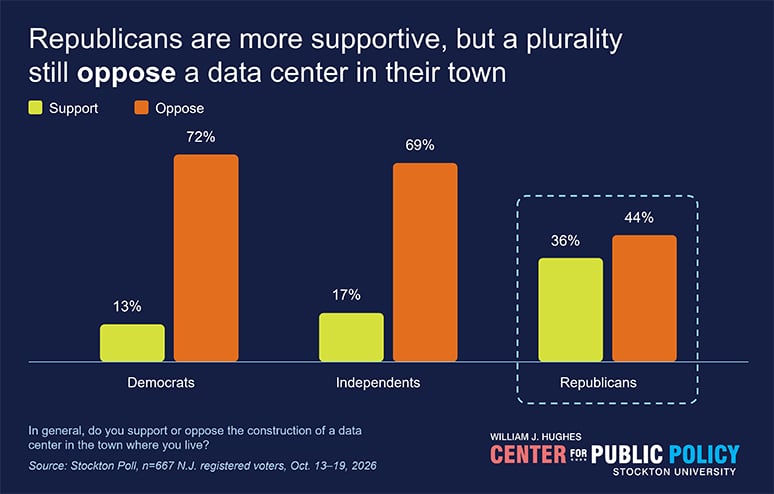
- 65% of NJ voters oppose data centers in their hometowns, finds Stockton University poll
As part of NJBIZ’s latest virtual discussion, industry professionals examined New Jersey’s evolving energy and infrastructure landscape, including rising energy demands, affordability concerns and the growing impact of data centers.
Moderated by NJBIZ Editor Jeffrey Kanige, the Oct. 28 panel featured:
- Eric DeGesero, representing the Fuel Merchants Association of New Jersey and the New Jersey Propane Gas Association
- Michael Makarski, head of external affairs for the Engineers Labor Employer Cooperative, Local 825
- Daniel Markind, a real estate, energy and aviation attorney at Flaster Greenberg PC
- Stephen Sweeney, former New Jersey Senate president and chair of Natural Allies New Jersey
During the discussion, panelists addressed challenges including electric grid capacity, rising electricity costs, data center development and the need for additional generation.
The panelists also examined Gov. Mikie Sherrill’s energy policy, the state’s permitting process and how New Jersey can balance economic development, energy affordability and environmental concerns while meeting demand.
Growing data center opposition in New Jersey
As data center development continues across the state, residents are raising concerns about the impact these facilities could have on their communities, including electricity costs, water consumption and transparency.
According to a new Stockton University poll, 65% of New Jersey voters oppose data center construction in their hometowns, while 52% oppose development anywhere in the state. The survey, conducted among 667 registered voters, found that 45% identified higher electricity bills as a major concern, followed by water supply impacts at 43% and artificial intelligence at 24%.
During the NJBIZ panel, Sweeney said the growing opposition has made it difficult for lawmakers to support new developments “with as angry a mood people are in. It needs a huge reset.”
Sweeney emphasized the need for developers to work with local communities and address residents’ concerns before moving forward with projects.
Markind echoed those concerns, arguing that developers have contributed to the opposition through a lack of communication and transparency. “People have legitimate concerns about these things,” he said.
Despite the opposition, the Stockton poll found that 33% of voters identified good-paying jobs as a potential benefit, while 29% cited increased property tax revenue and 27% pointed to New Jersey’s competitiveness in the technology industry.
Struggling to meet demand
As New Jersey continues to face growing energy demand, panelists raised concerns about the state’s electric grid capacity and its ability to support future development.
Makarski emphasized that upgrading the electric grid is only part of the solution, as New Jersey also needs to increase its energy generation to meet demand.
Replay: Energy, Infrastructure & Innovation Panel Discussion
Click through to watch the full panel discussion!
“We cannot energy efficiency our way out of a supply crisis,” Makarski said. “We still have to generate more electrons, right? Just at its basic core, we need to generate more, whether it be in-state or within PJM.”
Sweeney pointed to a proposed $50 million solar project in Gloucester County that was reduced in size because the electric grid could not accommodate the additional power.
“So, we need energy. We want to generate energy. We’re going to generate clean energy. And guess what? We can’t,” Sweeney said.
Panelists also addressed the challenges of developing new infrastructure in New Jersey, including lengthy permitting processes and rising construction costs. Makarski said it can take nearly three years from concept to construction, putting New Jersey at a disadvantage compared with neighboring states.
Speakers stressed that expanding energy generation, modernizing the electric grid and improving the permitting process will be critical to supporting New Jersey’s economic growth.
Balancing affordability and development
As New Jersey looks to address rising energy costs, panelists emphasized the importance of maintaining affordability for residents and businesses.

DeGesero highlighted Sherrill’s approach to energy development, which includes expanding natural gas, nuclear and renewable energy sources, rather than relying on a single solution.
“We no longer have an ideology of electrifying everything dominating. We have an ideology of ‘all of the above,’ and affordability is dominating,” DeGesero said.
Markind supported the all-of-the-above approach, but cautioned that expanding energy production would take time as demand continues to increase.
“We’re going to end up with energy bottlenecks because the technology is going faster than we can construct things,” Markind said.
Sweeney also emphasized the importance of natural gas and nuclear in supporting New Jersey’s future energy needs, arguing that the state must reduce its reliance on electricity generated elsewhere.
Panelists agreed that increasing in-state energy generation, improving infrastructure and reducing development delays will be essential to keeping New Jersey competitive while addressing energy affordability.
The post NJBIZ panel: Affordability, infrastructure shape NJ’s energy future appeared first on NJBIZ.
