


The basics:
- Industry leaders examined New Jersey’s growing energy demands, infrastructure challenges
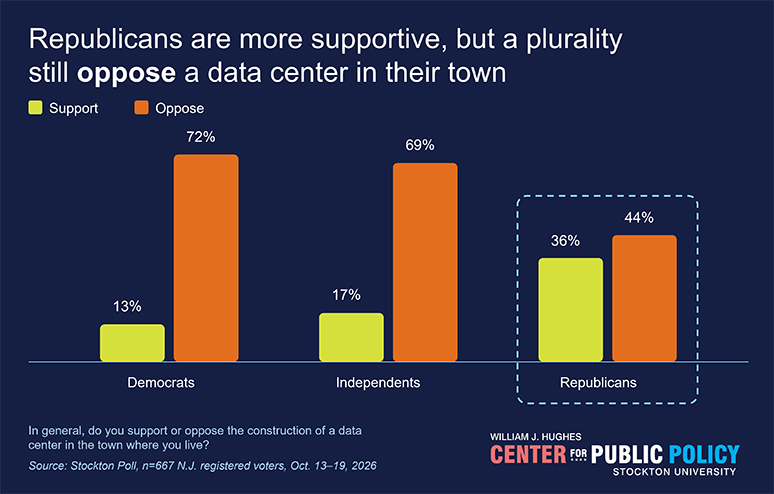
- Stockton University poll: 65% of NJ voters oppose data centers in their hometowns
- Panelists called for grid modernization, more energy generation, permitting reform
- Nuclear, natural gas, offshore wind were discussed as potential energy sources
As part of NJBIZ’s latest virtual discussion, industry professionals examined New Jersey’s evolving energy and infrastructure landscape, including rising energy demands, affordability concerns and the growing impact of data centers.
Moderated by NJBIZ Editor Jeffrey Kanige, the Oct. 28 panel featured:
- Eric DeGesero, representing the Fuel Merchants Association of New Jersey and the New Jersey Propane Gas Association
- Michael Makarski, head of external affairs for the Engineers Labor Employer Cooperative, Local 825
- Daniel Markind, a real estate, energy and aviation attorney at Flaster Greenberg PC
- Stephen Sweeney, former New Jersey Senate president and chair of Natural Allies New Jersey
During the discussion, panelists addressed the challenges facing New Jersey’s energy infrastructure, including electric grid capacity, rising electricity costs, data center development and the need for additional energy generation.
The panelists also examined Gov. Mikie Sherrill’s approach to energy policy, the state’s permitting process, and how New Jersey can balance economic development, energy affordability and environmental concerns while meeting growing demand.
Opposing data centers
As data center development continues across New Jersey, residents are raising concerns about the impact these facilities could have on their communities, including electricity costs, water consumption and transparency.
According to an Oct. 28 Stockton University poll, 65% of New Jersey voters oppose data center construction in their hometowns, while 52% oppose development anywhere in the state.
The poll, conducted among 667 registered voters, found that 45% identified higher electricity bills as a major concern, followed by water supply effects at 43% and artificial intelligence at 24%.
During the NJBIZ panel, Sweeney said the growing opposition has made it difficult for lawmakers to support new developments.
“No one in the Legislature is going to support a data center with as angry a mood people are in. It needs a huge reset,” Sweeney said.
He emphasized the need for stakeholders to communicate with local communities and address residents’ concerns before moving forward with projects.
Markind echoed those concerns, arguing that developers contributed to the opposition by dismissing residents’ questions. “People have legitimate concerns on these things,” he said.
Makarski noted that opposition to data centers differs from the backlash against warehouses, which was largely concentrated in communities where projects were proposed. He argued that the national debate surrounding artificial intelligence has intensified concerns about data center development.
Despite the opposition, the Stockton poll found that 33% of voters identified good-paying jobs as a potential benefit, while 29% cited increased property tax revenue and 27% pointed to New Jersey’s competitiveness in the technology economy.

Meeting demand
As New Jersey continues to face growing energy demands, panelists raised concerns about the state’s electric grid capacity and its ability to support future development.
Markind argued that the state’s electrical infrastructure needs significant improvements to accommodate additional demand. “The electric grid needs to be improved. It needs to be modernized. How we do that is an issue that we all have to face,” Markind said.
Makarski emphasized that upgrading the grid is only part of the solution, as New Jersey also needs to increase energy generation. “We cannot energy efficiency our way out of a supply crisis,” Makarski said.
He argued that New Jersey must expand electricity generation both within the state and across PJM, the regional electric grid operator.
Replay: Energy, Infrastructure & Innovation Panel Discussion
Click through to watch the full panel discussion!
Sweeney pointed to a proposed $50 million solar project in Gloucester County that he said was reduced in size because the grid could not accommodate the additional power. “So, we need energy. We want to generate energy. We’re going to generate clean energy. And guess what? We can’t,” Sweeney said.
Panelists stressed that expanding energy generation and modernizing the electric grid will be critical to supporting New Jersey’s economic growth.
Balancing act
As policymakers seek to address rising energy costs, panelists emphasized the importance of expanding energy production while maintaining affordability for residents and businesses.
DeGesero praised Sherrill’s approach to energy development, which he described as a shift toward natural gas, nuclear power and renewable energy, rather than relying on a single source. “We have an ideology of all of the above,” DeGesero said.
He argued that the administration’s approach places greater emphasis on affordability and gives energy providers more flexibility.

Markind supported the approach but cautioned that expanding energy production would take time as demand continues to increase. “We’re going to end up with energy bottlenecks because the technology is going faster than we can construct things,” Markind said.
Beyond electricity generation, DeGesero raised concerns about the region’s declining fuel refining capacity and its impact on transportation and construction costs. According to DeGesero, the Delaware Valley region lost half of its refining capacity between 2009 and 2021, increasing its dependence on pipelines and fuel shipments.
“Diesel is the fuel that moves the world economy,” DeGesero said. “It doesn’t simply move the big trucks. It moves industry. It moves construction.”
Makarski said rising fuel costs can also affect construction projects, contributing to delays and increased expenses.
Governor’s warning
On Nov. 2, Gov. Mikie Sherrill warned port and terminal operators across the state that accepting Russian diesel shipments authorized by the Trump administration could expose businesses and individuals to significant civil and criminal penalties. Find out more.
Permitting delays
New Jersey’s lengthy permitting process poses additional challenges for developers seeking to invest in new infrastructure projects, according to panelists.
Makarski estimated that the state’s development process can take nearly three years from concept to construction, with additional requirements potentially extending that timeline.
He argued that these delays could push developers toward neighboring states, particularly Pennsylvania, where projects may move forward faster. “If the process, if it’s going to cost almost the same amount, but the process is 40% faster 3 miles on the other side of the river, which side are you going to go to, right?” Makarski said.

Sweeney echoed those concerns, citing rising construction costs and regulatory delays as obstacles to economic development. “Reform is desperately needed in this state,” Sweeney said. “I’m glad [Sherrill’s] focusing on it. I think she’s made some good steps forward.”
He also emphasized the financial consequences of delaying development. “Time is money, especially in construction,” Sweeney said.
Panelists credited Sherrill for prioritizing permitting reform, arguing that reducing delays could help New Jersey remain competitive.
Growing role
As New Jersey looks to expand its energy supply, panelists pointed to nuclear power as a potential solution to growing electricity demand.
Sweeney highlighted efforts to restart a reactor at Pennsylvania’s Three Mile Island facility, which he said demonstrates the amount of power needed to support data center development. “So, everyone’s saying that nuclear is going to be the end all to be all. It’s not. You need all the above and you need a lot of it,” Sweeney said.
He also discussed the former Oyster Creek nuclear power plant site in Ocean County, where Holtec International has proposed developing four small modular reactors. The project remains in the planning stages and would require additional regulatory approvals before construction.

Makarski noted that nuclear energy is one area where state and federal policies appear to be aligned, creating opportunities for future investment.
“The federal government is making huge amounts of money available for long lead items to build reactors,” Makarski said.
He argued that the alignment could provide an opportunity for state and federal officials to work together on expanding nuclear energy development.
Panelists emphasized that while nuclear energy could help address New Jersey’s electricity needs, it would need to be developed alongside other energy sources.
Other energy sources
Beyond nuclear energy, panelists discussed the roles natural gas and offshore wind could play in addressing New Jersey’s energy needs.
Sweeney posited that expanding pipeline infrastructure would help the state increase its energy supply and reduce its dependence on neighboring states. “But pipelines are not the enemy; it’s the safest way of moving product. We need it here desperately,” Sweeney said.
Markind pointed to natural gas reserves in northeastern Pennsylvania, arguing that additional pipeline connections could strengthen New Jersey’s energy security. He specifically referenced the Northeast Supply Enhancement project as an example of pipeline development that has faced political opposition.
“The fact that we are not in New Jersey solidifying our own energy security by allowing that gas to just come into the state of New Jersey just boggles my mind,” Markind said.
However, the panelists differed on the future of offshore wind development.
Markind questioned the industry’s economic viability, citing high costs and opposition from coastal communities. “I would say the chances of all this happening from the wind standpoint are pretty low,” Markind said.

Sweeney disagreed, arguing that technological improvements could make offshore wind more affordable and help revive projects in New Jersey. “I do believe that it will make a comeback,” Sweeney said.
He also emphasized the potential economic benefits of offshore wind manufacturing, particularly in South Jersey, where the state previously pursued port infrastructure to support the industry.
Investing for growth
While energy affordability and development challenges dominated much of the discussion, panelists also highlighted the potential economic benefits of new infrastructure projects.
Makarski said that data centers, pipelines and power plants provide significant opportunities for New Jersey’s construction industry. “Things like data centers, things like pipelines, things like power plants. These are game changers for folks in our industry,” Makarski said.
He also pushed back against criticism that construction projects only create temporary employment, explaining that workers often move between projects throughout their careers.
Sweeney, who spent decades working as an ironworker, echoed that argument. “They’re not temporary jobs because it’s job after job. It’s different employers,” Sweeney said.
He recalled working for 33 different contractors during one year while remaining employed throughout that period.
DeGesero also challenged the characterization of construction employment as temporary, arguing that workers can maintain long-term careers while moving between projects.
Beyond energy development, Makarski pointed to the need for continued investment in roads, bridges, mass transit and water infrastructure. He highlighted the importance of upgrading drinking water and wastewater systems, arguing that those investments often receive less attention than electricity infrastructure.
“We just flip the tap and you just assume it works,” Makarski said.

Workforce development
Panelists also discussed the importance of maintaining a skilled construction workforce as infrastructure demands increase.
Makarski argued that the challenge is not necessarily a shortage of available workers but ensuring that projects have sufficient funding and regulatory certainty to move forward.
“We have a project and an investment and a business certainty problem,” Makarski said.
Sweeney agreed, explaining that construction unions can expand training programs when projects and employment opportunities are established.
The panelists emphasized that continued investment in energy and infrastructure projects could support construction employment, generate tax revenue and strengthen New Jersey’s economic competitiveness.
The post Power struggle: Experts weigh NJ’s energy needs against rising costs appeared first on NJBIZ.
