

The basics:
- NJEDA approved up to $5.4M in tax credits for Lucy the Elephant’s redevelopment
- $6.4M project includes a new visitor center, interior restoration, park improvements
- Save Lucy Committee hopes to break ground in April 2027, pending final approvals and requirements
- Executive Director Richard Helfant aims to increase tourism, expand operations, make Lucy financially self-sufficient
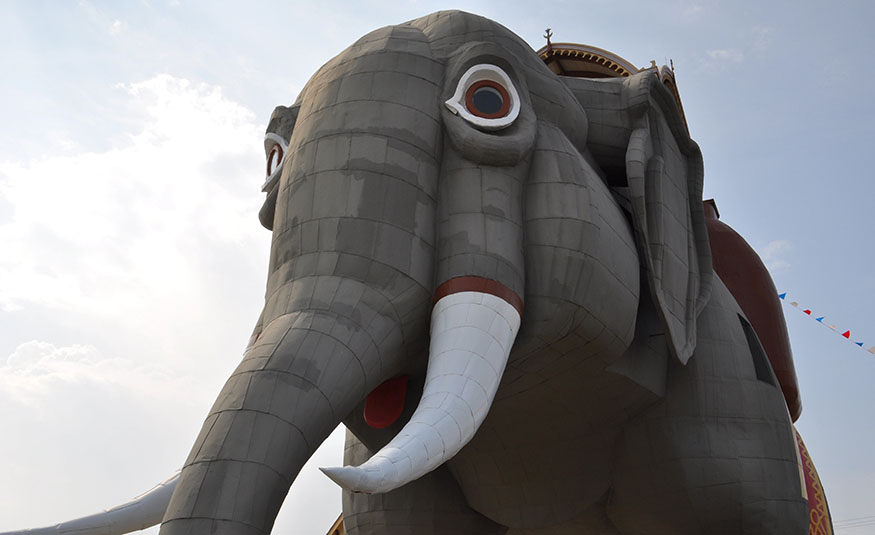
Lucy the Elephant is moving closer to a major restoration and expansion project after the New Jersey Economic Development Authority approved up to $5.4 million in tax credits for the 145-year-old Jersey Shore landmark.
The NJEDA’s Oct. 22 board meeting minutes have since been published, documenting the unanimous approval of the Cultural Arts Facilities Expansion Program award for the Save Lucy Committee.
According to the board’s official memorandum, the award covers 100% of eligible project costs, up to approximately $5.4 million. The organization must still meet the conditions attached to the award before receiving the tax credits.
The approval follows 17 months of uncertainty for the organization, including the loss of a previously awarded $500,000 federal preservation grant in 2025 amid cuts associated with the Trump administration’s Department of Government Efficiency (DOGE).
Due for upgrades
The project will support construction of a new visitor and interpretive center, restoration of Lucy’s water-damaged interior and improvements to the surrounding park in Margate City.
“Lucy the Elephant is more than a beloved landmark, it is a symbol of New Jersey’s rich history and unique character that’s cherished by residents and visitors from around the world,” said NJEDA Chief Executive Officer Evan Weiss. “The rehabilitation of this historic landmark will support South Jersey’s tourism economy by helping attract more visitors, increase foot traffic for local businesses, and generate investment that benefits residents, entrepreneurs, and communities throughout Atlantic County.”
The project is part of a broader preservation effort involving the City of Margate, New Jersey Historic Trust and federal funding.

Catching up with the CEO
In an exclusive interview with NJBIZ, Save Lucy Committee Executive Director and CEO Richard Helfant discussed what the funding means for Lucy, the project’s estimated $6.4 million cost and his long-term goal of making the landmark financially self-sufficient.
The following interview has been edited for length and clarity.
NJBIZ: What does the $5.4 million in NJEDA tax credits mean for the Save Lucy Committee, and how significant is this investment for the organization’s future?
Richard Helfant: “Well, it means everything because without it, I don’t know how we could have built the new building.”
Helfant said the facility will include a larger gift shop, ADA-compliant restrooms and an interpretive center allowing visitors who cannot climb Lucy’s stairs to experience virtual tours.
“The tax credit award enables us to move forward with construction of that building. It also enables us to complete the interior restoration of the elephant itself and redo the park.”
Without the award, Helfant said, the organization would have reconsidered the project’s scope and determine which improvements it could afford.
“So it means the future of Lucy.”
Q: How much is the entire redevelopment project expected to cost, and how much funding has the committee already raised?
A: “The project is expected to cost approximately $6.4 million, with the committee having already raised $1.2 million.”
He said the organization now has a funding plan in place following the NJEDA approval.
The $1.2 million represents funding Helfant said the organization has raised. It should not be treated as separate from all other financing sources without a complete breakdown of the project’s funding structure.

Q: Since the award comes in the form of tax credits rather than a direct grant, how does the committee plan to convert those credits into funding?
A: “First of all, the tax credits don’t start to be available until the project is complete. So, we had to go out and secure funding to build the building, which we’ve done.”
Once the project is finished, a third-party broker will sell the credits, with the proceeds used to repay the lender.
According to Helfant, the organization expects the credits to sell for approximately 90 cents on the dollar, meaning a buyer could purchase $100,000 in tax credits for $90,000. The final proceeds will depend on the amount of credits issued and the price secured through their sale.
Q: What specific improvements will visitors see once the redevelopment is completed, and how will the new visitor center change the overall experience?
A: “It’ll change it dramatically.”
The new visitor center will feature a larger gift shop, ADA-compliant restrooms and an interpretive center providing an alternative experience for visitors unable to climb Lucy’s stairs.
Helfant said the addition of restrooms, which the attraction previously lacked, will allow the organization to accommodate more school groups, organized tours and other visitors.
“It just opens up the market tremendously for us to market Lucy more aggressively.”
The project will also address years of water infiltration that have left visible damage inside the elephant.
According to the NJEDA, interior improvements will include patching and refinishing water-damaged plaster; repairing moisture-damaged wood; replacing the heating, ventilation and air conditioning system; and upgrading insulation, ventilation, ductwork, drains and fire suppression systems.
[Lucy the Elephant’s renovation project] just opens up the market tremendously for us to market Lucy more aggressively.
– Richard Helfant, executive director and CEO, Save Lucy Committee
Outside, the surrounding park will receive new landscaping, lighting, fencing and accessible walkways. Helfant said additional improvements will include benches, a water feature and a half-block recreation of the historic boardwalk that stood along the shoreline before 1944.
The boardwalk section will serve as an entrance to the new visitor center.
“There’ll be a lot of history, a lot of culture, and it’ll be a completely new and inviting experience without detracting from Lucy, which is the attraction.”
The NJEDA said the new interpretive center will also provide space for programming featuring local artists and performers.
Q: What is the current construction timeline, and are there any remaining approvals or financial hurdles that could delay the project?
A: “The answer is an unknown.”
At the time of the interview, Helfant said the organization was awaiting the expiration of the governor’s two-week review period following the Oct. 22 board meeting.
The NJEDA has since published the meeting minutes, confirming the board’s approval. However, the organization must still satisfy the conditions outlined in its formal award documents.
“We have to meet all of those conditions, and I don’t know what those conditions are going to be because we haven’t seen them.”
Helfant said he contacted the project’s architects immediately after the board approved the award and instructed them to resume work on construction documents.
The committee hopes to solicit contractor bids in January 2027, followed by proposal reviews, bonding and contract awards.
“I’m hoping in a perfect world to break ground in April because that’s our goal.”
The tentative April 2027 groundbreaking remains dependent on meeting NJEDA requirements and completing the necessary preparations.

Q: With construction potentially beginning near the start of the tourism season, will Lucy remain open to visitors?
A: “I think it’s going to be a bonus for us, because we’ve been talking about it for so long, I think that there’ll be public interest in actually seeing construction.”
Helfant said construction is not expected to significantly disrupt operations because the gift shop is currently located across the street. And although certain phases of interior restoration could require brief interruptions to tours, he does not anticipate an extended closure.
Interior restoration is expected to begin once the new building is approximately 80% complete, potentially during winter 2028.
“There may be a half a day here and there where they’re doing something inside the elephant that would prevent us from doing a tour, but it will not be shut down for any length of time.”
Q: How many visitors does Lucy currently attract annually, and how do you expect that number to change during and after construction?
A: “Right now, we are fortunate to welcome about 150,000 visitors a year, and you have to realize that Lucy is a drive-to destination.”
Unlike attractions in Atlantic City’s tourism district, Helfant said, Lucy relies heavily on visitors making a dedicated trip to Margate.
Once the visitor center opens, the organization plans to expand its marketing efforts, particularly toward school groups and visitors during traditionally slower periods.
“We’re hoping to see a significant increase during those periods.”
Q: What kind of economic impact could the expansion have on Margate and the greater Atlantic City region?
A: “Lucy is a major component to the tourism package of Atlantic City, and that’s not my opinion. That’s fact.”
Lucy already plays an important role in the region’s tourism industry, according to Helfant, who said Visit Atlantic City consistently identifies the landmark as its most frequently inquired about nongaming attraction.
Helfant said the expanded attraction could encourage tourists to extend their visits to the region, potentially benefiting nearby hotels, restaurants and businesses.
“I expect her to have a very positive impact on tourism in the greater Atlantic City region.”
Lucy is a major component to the tourism package of Atlantic City, and that’s not my opinion. That’s fact.
– Richard Helfant
The NJEDA has also identified heritage tourism as an economic development opportunity for Atlantic County, with the CAFE Program designed to attract visitors, support cultural institutions and generate additional economic activity in surrounding communities.
“Investing in its preservation means protecting that legacy, sustaining tourism, and supporting the local businesses that are vital to our Shore economy,” said state Sen. Vince Polistina, R-2nd District, in the NJEDA announcement.
Q: Does the committee anticipate creating permanent positions or additional seasonal employment following construction?
A: “I do. I see us having to grow absolutely.”
Currently, Lucy operates on a reduced schedule during the winter, opening only on weekends. Helfant hopes the new facility will allow the attraction to expand weekday operations throughout the colder months.
That expansion could require additional tour guides, increased hours for existing management staff and potentially a dedicated bookkeeper.

Helfant said he currently handles the organization’s financial responsibilities himself, limiting the time he can devote to marketing and other initiatives.
“Right now I do all the financials myself, and it consumes so much of my day doing the financials, because it’s accounting work that it takes me away from doing what I was hired to do, and that’s market Lucy.”
Although the organization has not established a specific hiring target, Helfant expects employment opportunities to increase as operations expand.
Q: With Lucy having stood along the Jersey Shore for more than 140 years, how does this investment help secure the landmark’s future, and what is your vision for the next decade?
A: “We’re hoping that the traffic will increase, revenue will increase and we won’t have to rely as heavily on grants and other things, because they’re never a guarantee.”
Helfant envisions expanded winter hours, more organized tours, special events, corporate meetings and private gatherings.
The need for ongoing maintenance remains significant given Lucy’s age and proximity to the Atlantic Ocean.

Built in 1881, the six-story elephant was originally constructed to promote real estate sales and attract visitors to the Jersey Shore.
The landmark was nearly demolished in the late 1960s before preservation efforts led to its relocation in 1970. It received National Historic Landmark designation in 1976.
Helfant said the organization hopes to eventually establish an endowment to provide funding for future repairs and unexpected maintenance expenses.
“I would love to get to a point where Lucy is financially self-sufficient, and we don’t have to rely on government grants, or private grants, or anything like that.”
Q: What would your message be to companies interested in investing in Lucy or developing corporate partnerships with the organization?
A: “I think there’s an opportunity for that. I do. I think there’s an opportunity for that right now.”
Helfant pointed to Lucy’s distinctive appearance as a potential opportunity for corporate sponsorships and marketing partnerships.
One idea involves transforming the decorative water bucket beneath Lucy’s trunk into a branded display resembling a Planters peanuts container or Coca-Cola can.
He compared the concept to corporate naming rights and sponsorship agreements commonly used at professional sports stadiums. However, Helfant emphasized that any partnership would need to respect Lucy’s historic designation and family-friendly identity.
“It has to be tasteful. It has to be family oriented, because she’s a national historic landmark, but there’s definite opportunities for corporate America to get involved and help us help them.”
Q: Have any companies previously expressed interest in partnering with Lucy?
A: “Why isn’t there a Lucy, the elephant mover? It’s iconic.”
Helfant said he previously approached Planters about a potential partnership, although the company did not pursue the idea.
He also discussed another concept involving the board game Monopoly and its connections to Atlantic City.
With Marvin Gardens, a location in Margate, featured on the Monopoly board, Helfant believes Lucy could become a distinctive addition to the game’s collection of playing tokens.
Helfant suggested a potential partnership with Hasbro, the company that owns Monopoly, to create a collectible Lucy playing piece. The idea could generate additional revenue for the nonprofit while introducing the landmark to a broader audience.
“They could do it in pewter, they could do it in gold, they could do it in silver,” Helfant said.
He described the potential partnership as a mutually beneficial opportunity for the organization and a corporate sponsor.
Q: Beyond securing the funding, how long do you believe it will take for Lucy to achieve the financial independence you’re envisioning?
A: “I’m thinking within five years after completion, we should begin to see a significant upswing in traffic and maybe sooner, but I’m being cautiously optimistic that it’ll take maybe five years.”
Although the organization has established a long-term goal of financial self-sufficiency, Helfant acknowledged that increasing attendance and revenue will take time.
He estimates construction of the new visitor center will take between 12 and 18 months once work begins. Following completion, the organization will need additional time to expand its marketing efforts, attract new visitors and establish additional revenue streams.
For Helfant, the funding provides an opportunity to move beyond restoration and focus on Lucy’s long-term financial stability, toward preserving the historic attraction without relying as heavily on outside assistance.
