
BY COLLEEN O’DEA
Spending on this year’s New Jersey congressional races has topped $100 million, fueled by several hotly contested primaries, two special elections, a well-financed Senator and the critical 7th District House race.
With still a month of campaign spending to report and the final two weeks of outside spending to be counted, the total cost of these elections could increase by millions more.
Election Day is Nov. 3 and all dozen House seats and Democrat Cory Booker’s U.S. Senate seat are on the ballot.
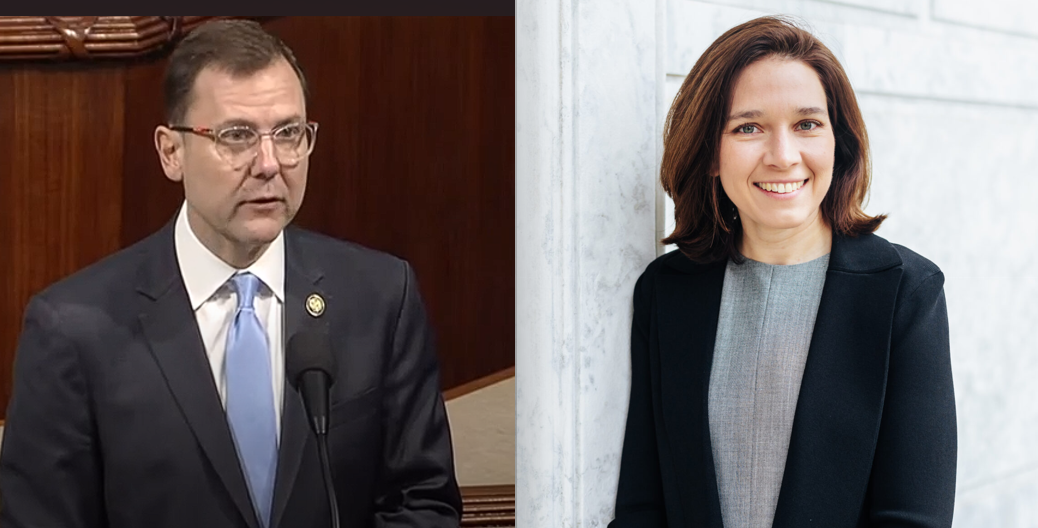
The most expensive House race is unsurprisingly in Central Jersey’s 7th District, where Rebecca Bennett, a Democrat with a resume similar to Gov Mikie Sherrill’s, is trying to unseat Republican Rep. Tom Kean Jr., son of a popular former governor who was trailing in InsiderNJ’s only independent poll in the race this year. It’s the one race in New Jersey everyone agrees will help determine which party wins the House.
Federal Election Commission candidate reports and outside spending figures from OpenSecrets, a nonpartisan website tracking money in politics, put the total spent at more than $29 million, including amounts spent in the four-person Democratic primary. Already a record for a New Jersey House race, that total includes candidate spending through Sept. 30 and independent spending reported as of Oct. 21. It does not include broadcast ads reserved but not yet paid for.
Bennett has raised more money than Kean — $8.2 million versus $5.9 million. She took in more than $4 million in the third quarter alone. But she has also spent more, including to win the June primary. Kean, who faced no primary opposition, started the last month of the campaign with $557,000 more in the bank. But outside spending has dwarfed the candidates’ totals, with $13.5 million spent so far and all but about $200,000 in the general election. About $2 million more has been spent to benefit Kean, most of that in negative ads against Bennett.

According to data from OpenSecrets, seven groups have spent $7.3 million so far opposing the former helicopter pilot and mother of two from Bridgewater. The biggest spender has been Land I Love PAC, which uses an Alabama address and is at least party funded by a conservative group and a Louisiana developer. Nearly all of its independent spending so far has been against Bennett, a total of $4.1 million. Also spending more than $1 million on the race is the Congressional Leadership Fund (CLF), the House GOP super PAC, which laid out $2.1 million.
But CLF is one of two GOP committees that has backed away from the 7th, according to several news reports, as Republicans seek to prevent losses in other states where they had not initially thought incumbents to be vulnerable. Republicans had spent or reserved $14 million to help reelect Kean, compared to $7.8 million meant to help Bennett, according to sources, but it’s unclear whether all that GOP money now will be spent.
Harrison Neely, a Kean campaign spokesman, did not specifically address the loss of GOP backing, but said, “We have enough support to win.”
The Bennett campaign is taking the money Republican groups have reserved for ads at face value, though. Carly Jones, Bennett’s spokeswoman, said the campaign has worked to raise funds from multiple sources, excluding corporate PACs, to promote its message.
“From lighting $650,000 on fire in a failed attempt to meddle in the primary, to spending nearly $17 million in support of Tom Kean Jr. in the general election, Trump, Musk, Kean Jr., and Republicans have tried at every turn to stop Rebecca,” Jones said. “Despite the massive spending advantage, Rebecca’s formed a grassroots coalition of Democrats, Republicans and Independents who believe in her message of lowering costs, getting corruption out of Washington, and putting country over party.”
Bennett, meanwhile, is expected to benefit from $1.8 million in anti-Kean spending so far by House Majority PAC – much of that on ads critical of Kean’s nearly four-month absence from the House for what he described on his return to office as treatment for depression. VoteVets.org also spent more than $1 million on ads promoting Bennett.
“Money has mattered a great deal in the three federal races we’re watching most closely in New Jersey, though for different reasons,” said Micah Rasmussen, director of the Rebovich Institute for New Jersey Politics at Rider University. “In NJ7, Bennett’s ability to raise money has been one of the biggest signs of her viability, and it’s been necessary for her to respond to the ads that have sought to define her.”
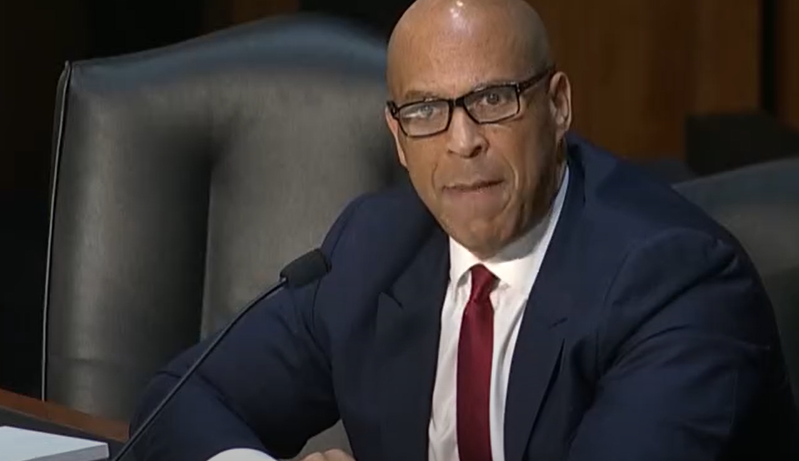
As expensive and contentious as this race is, fundraising in the 7th is still dwarfed by the race for the U.S. Senate seat held by Democrat Cory Booker. Seeking his third full term in the Senate – he was first elected to fill the unexpired term of Frank Lautenberg, who died in June 2013 – Booker has raised $35.3 million this election cycle. That’s the 6th largest haul of any Senate candidate in the nation this year, but the most raised by a candidate not facing a close race. No Republican has won a U.S. Senate seat in New Jersey for more than half a century. Booker’s opponent is Justin Murphy, the former mayor of Tabernacle who had less than $10,000 in the bank as of Sept. 30, compared with Booker’s $22.6 million.
Although Booker has said he has not decided whether to try another presidential run – he ended his 2020 campaign shortly before the Iowa caucuses — his fundraising and warchest would give him a good start for 2028.
“Money has prevented Justin Murphy from making any contact with or impression on
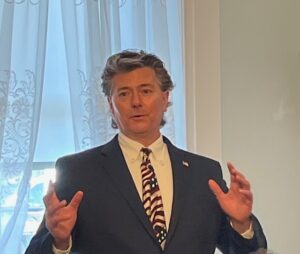
voters, in spite of being a pretty interesting candidate,” Rasmussen said. “By not forcing Booker to spend down his reserves, he has been able to bank a head start on his likely presidential campaign in 2028.”
He added that a lack of money has been “one of the biggest obstacles” to Democrat Zack Mullock’s contention that the southernmost 2nd District “is in serious play.”
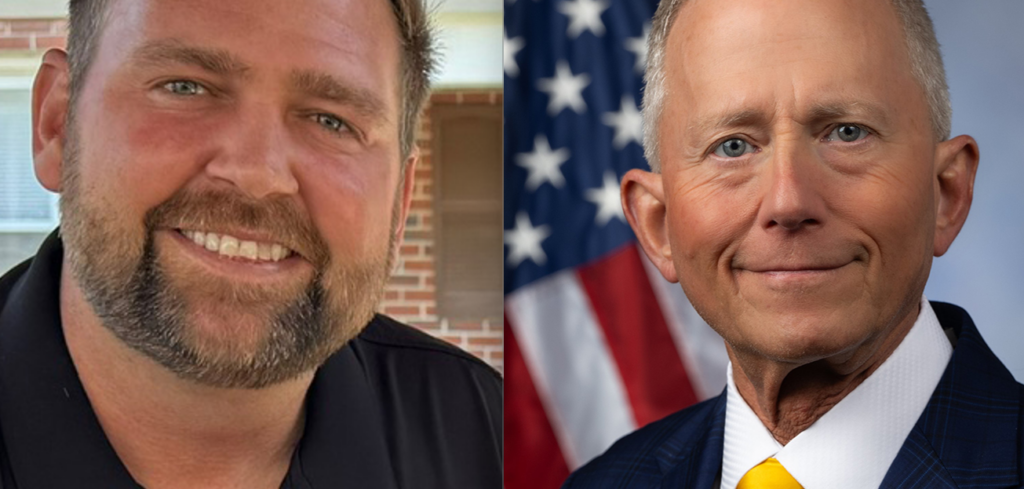
Mullock, the mayor of Cape May, is challenging Republican Rep. Jeff Van Drew, originally elected as a Democrat in the 2018 New Jersey blue wave. Van Drew has outspent Mullock more than two-to-one and had $1.2 million in the bank on Sept. 30, compared to Mullock’s $117,000. Sabato’s Crystal Ball changed its rating of the race from safe Republican to likely Republican earlier this week, calling it a race to watch “in the event of a blue tsunami.”
Also contributing to this year’s expensive races were the special primary and general elections in North Jersey’s 11th District to fill Sherrill’s seat, now held by Democrat Analilia Mejia, and the 12th District Democratic primary to replace retiring Rep. Bonnie Watson Coleman. Thirteen Democrats were on the primary ballot in each of those races, which meant millions spent by the candidates and millions more in outside spending.