


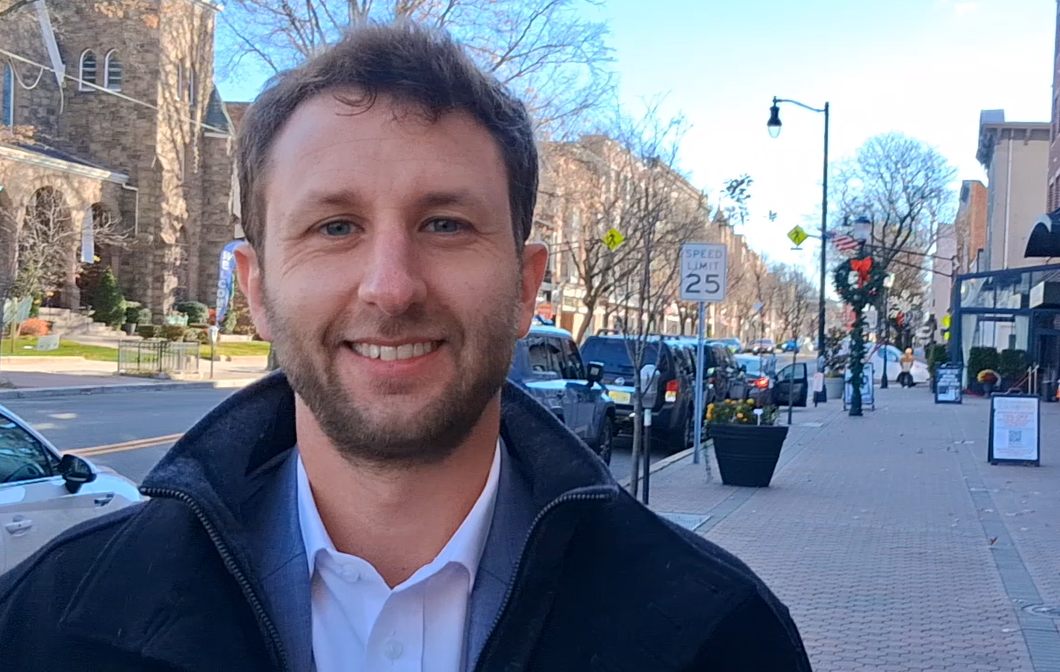
By Michael Roth
The best part of running for Congress is hearing people’s stories. There’s something humbling about strangers trusting you with their deepest vulnerabilities.
Of the countless stories I heard across our district, two capture what so many of our neighbors are facing.
Jane was 94, had lived in New Jersey her entire life, and told me she loved this state but wasn’t sure she could afford to die here.
Adam was 23, a college graduate with student debt who couldn’t find a job. He’d done everything he was supposed to do but couldn’t imagine owning a home or raising a family. Worse, he felt alone, like he didn’t belong.
At opposite ends of their lives, they were asking the same question. Is there still a place for me here?
For 15 years, I’ve worked across business and government to expand economic opportunity, including as Co-CEO of Next Street and a senior leader at the U.S. Small Business Administration. I’ve seen what happens when institutions work for people, and what happens when they don’t. I ran for Congress to build an economy and a government that put people like Jane and Adam at the center. That means the opportunity to find a good job, afford a home, and raise a family, and to build a healthy, meaningful life with people you care about and who care about you.
My campaign had just one problem: Rebecca Bennett.
Rebecca and I fought a tough Democratic primary. I challenged her at every turn, and she remained disciplined, steady, and true to her values. I know how tough Rebecca is because I spent a year trying to find her breaking point and I never came close to it.
And I learned that her values weren’t just campaign promises.
Early in the race, Rebecca sold her individual stocks to avoid conflicts of interest, more than a year before she might take office. Tom Kean Jr., meanwhile, promised during his 2022 campaign to put his assets in a blind trust. Four years later, he still hasn’t established one.
I came away with enormous respect for Rebecca’s integrity and toughness, qualities that matter enormously in the face of what lies ahead.
The affordability crisis is putting enormous strain on families across New Jersey. And it’s unfolding at a moment of profound economic transformation. Global competition is reshaping American industry. We’re rethinking what we build, where we manufacture, how we power our economy, and what skills people need to succeed.
Adam went to college preparing for one economy and graduated into another. And now artificial intelligence could transform not only the skills he’ll need to find work, but how he’ll contribute and connect with others.
Much of the debate about AI focuses on whether it will take our jobs or make us unimaginably prosperous. But there’s another question we need to be asking:
What happens when technology makes needing one another optional?
AI isn’t arriving in a healthy, connected society. It’s arriving in one where millions already feel economically adrift and profoundly alone. Imagine Adam finding a job where his closest collaborator is an AI assistant. He gets answers instantly, learns new skills, and finishes his work faster. But who takes him under their wing? Who becomes his friend? Who notices when he’s struggling? Every interaction becomes a choice rather than a necessity. We might create an economy in which people can accomplish extraordinary things on their own, while making it harder to find a place where they belong.
The relationships we build through depending on one another create the trust and sense of shared responsibility that hold communities together. When those bonds are strong, we’re healthier, safer, and better able to care for one another. That’s social capital – and it’s as essential to a thriving society as any economic resource.
In this election, we’re not just deciding how to build the economy of the future. We’re deciding how to build a society worth living in.
Rebecca and I disagreed on plenty. But we shared a belief that Donald Trump is a symptom of deeper problems in our society, not simply their cause. As Rebecca has said throughout her campaign, we have to be clear about what we’re fighting for.
Rebecca’s priorities speak to the magnitude of the challenges ahead: preparing workers for emerging industries, investing in energy and infrastructure, and building more housing so people can afford to live in the communities where they work. The goal isn’t simply economic growth, but ensuring people have a stake in the future we’re creating.
After the primary, I tried to reconnect with Jane. I eventually reached her daughter, who told me Jane had been forced to leave New Jersey for a more affordable home in Pennsylvania. She died a month after her move.
Ninety-four years spent building a life in New Jersey, only to spend her final days away from the place she loved. Where’s the dignity in that?
Jane spent her life building a home. Adam is struggling to imagine building one of his own. Their stories remind me that the choices we make today will shape lives for generations.
I once fought as hard as I could to defeat Rebecca Bennett. But after spending a year competing against her, I know her discipline, her integrity, and her toughness. Rebecca often says she’ll fight for the children of this district as fiercely as she fights for her own two daughters. I trust her wholeheartedly to fight for that future – for our children, for Jane and Adam, and for everyone wondering whether there’s still a place for them in the society we’re building.
