

The basics:
- Robert Garrett plans to retire as Hackensack Meridian Health CEO on June 30, 2027
- HMH has grown to 18 hospitals, 500-plus care sites and 41,000 employees
- Health system is pursuing a $3B statewide investment
- Garrett reflects on HMH’s medical school, research, COVID-19 response and more
As leader of New Jersey’s largest hospital network, Bob Garrett is in a very healthy place. After growing Hackensack Meridian Health into an award-winning nonprofit health system made up of 18 hospitals, 500-plus patient care sites statewide and 41,000 employees, Garrett is preparing to step down as CEO.
According to the Edison-based powerhouse, Garrett expects to retire June 30, 2027. Ahead of his departure, the HMH Board of Trustees kicked off a national search for his replacement.
During an interview with NJBIZ, Garrett quipped, “I tell my team – I’ll be working to the last day, last hour, last minute, last second because we have so much on our plate right now in terms of potential opportunities.”
“Just because I’m leaving doesn’t mean that there won’t be opportunities for partnerships and for us to continue to grow and move forward. So, I’ll be working hard over these next nine months to continue to lead the organization,” he said.
From the beginning
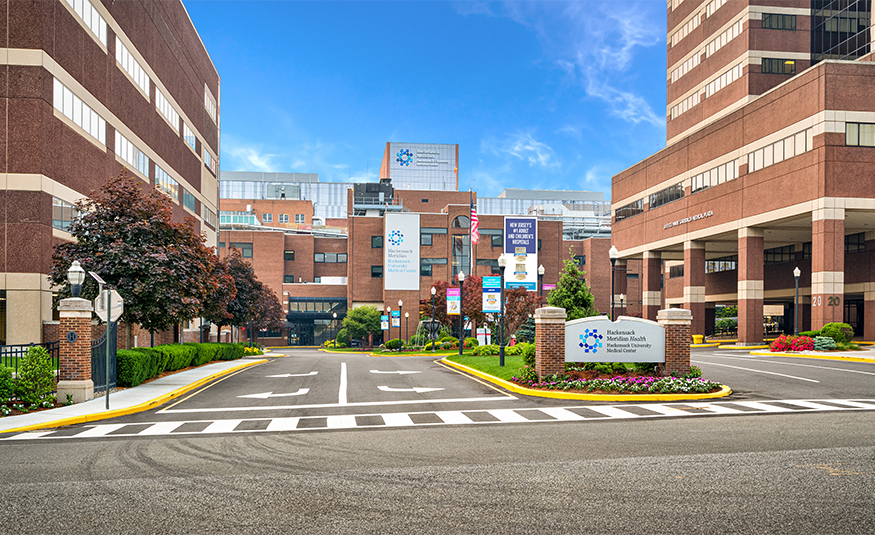
Garrett began his career in 1981 as an emergency room administrator at Hackensack Meridian University Medical Center. He was named president and CEO of the facility in 2009.
When Hackensack University Health Network merged with Meridian Health seven years later, Garrett took the helm of the newly founded network as co-CEO.
Since then, he has pioneered innovations in healthcare experiences, education and leadership in a system that is now triple the size it was in 2016.
According to HMH’s 10th anniversary report, the past decade’s growth has included:
- 500-plus patient care locations +178%
- 18 hospitals +29%
- $11 billion operating revenue +100%
- 2.2 million outpatient visits +18%
- 8,600 nurses +20%
- 7,504 affiliated physicians +25%
- 1,972 employed physicians +136%
Meanwhile, the network continues to pick up national recognitions for quality, innovation and workforce culture. It has received acknowledgements from organizations including U.S. News & World Report, Newsweek and The Leapfrog Group.
In a good place
Retiring is something Garrett said he’s been thinking about for the last few years and that 2027 “felt like a good time.”
“Our organization is in very, very good shape. We’re stable, we’re continuing to grow and quality outcomes continue to improve,” he said.
Garrett said, “I think as an executive and as a CEO of a health system, you have to think about not just your own personal timetable, but you have to think about what’s best for the organization,” he said. “And I felt the two aligned in 2027.”
When Garrett began mulling retirement, he talked to HMH’s board to kick off a succession planning process. “I think that will really result in something that’s going to be very smooth and soft landing, if you will, for the plane coming in,” he said. “Honestly, with something like this you have to think over the course of a few years if you’re going to do it right. And I’m really optimistic that the search process and the succession planning process that we’ve been undertaking will result in a very, very smooth transition.”
[A]s an executive and as a CEO of a health system, you have to think about not just your own personal timetable, but you have to think about what’s best for the organization.
– Robert Garrett, CEO, Hackensack Meridian Health
Next role
HMH expects to have a successor in place by the end of the first quarter of 2027. Garrett will then move into the role of CEO emeritus July 1, 2027. Additionally, he’ll help with the transition for up to a year, HMH said.
Garrett said, “That role will entail making sure that I can be an advisor to the new CEO and to the board on the transition process. And, certainly, if they need my help in any aspect of what’s going on at that point in Hackensack Meridian Health, I’ll be available to do that.”
“After 45 years, I have a lot of contacts, a lot of relationships and know the market pretty well. So, I’ll be an open book for the new CEO and the board. There’s only one CEO at a time, so I won’t be playing CEO by any means, but I’ll be hopefully a trusted advisor that can be very helpful,” he said.
A global healthcare leader, Garrett recently served a two-year term as chair of the World Economic Forum’s Health and Healthcare Governor’s Community.
Along with numerous accolades from NJBIZ, publications like Modern Healthcare have recognized Garrett. He also received the prestigious 2025 Ellis Island Award, which is recognized by both houses of Congress. And Garrett was just inducted into the New Jersey Hall of Fame.

Later this year, he scheduled to publish his first book with HMH Chief Quality And Clinical Service Line Officer Jose Azar titled, “Why Not: The Question that Drives Agile Leadership in Healthcare and Beyond.”
‘Keep getting better’
Garrett’s upcoming retirement comes as HMH presses forward with a historic $3 billion statewide investment aimed at redefining the standard of care. In pursuing its mission to “keep getting better,” HMH is developing a network of outpatient facilities to make healthcare more accessible and convenient for New Jerseyans. That’s included seven health & wellness centers designed to serve as a one-stop shop for primary care, specialty physicians, imaging services and outpatient rehabilitation.

Since unveiling the concept four years ago in Eatontown, HMH has brought the model to Clark, Clifton, Paramus, West Milford and Freehold. It also opened a $200 million first-of-its-kind healthcare hub at NJ Transit’s Metropark station in Woodbridge. HMH also debuted Urgent Care PLUS centers in Wyckoff, West Orange and Hoboken offering emergency medicine capabilities like CT scans and on-site labs for advanced, immediate care.

Additionally, the network is undertaking major projects to expand and modernize its flagship hospitals. That’s included:
- Helena Theurer Pavilion at Hackensack University Medical Center in Hackensack: A nearly $1 billion, state-of-the-art surgical and intensive care tower with cutting-edge robotic surgery and 175 new patient rooms.
- Cardiovascular Suite at Jersey Shore University Medical Center in Neptune: A $45 million advanced center that has nearly tripled patient capacity for life-saving heart and stroke care.
- Carrier Clinic in Belle Mead: A $40 million investment to create a dedicated adolescent and youth mental health facility.
Other projects on the horizon:
- Jersey Shore University Medical Center in Neptune: A landmark, more than $1 billion investment for a new critical care tower, 24 new operating rooms, and expanded patient facilities.
- JFK University Medical Center in Edison: A $400 million-plus master plan to expand the emergency department and upgrade critical infrastructure.
- Riverview Medical Center in Red Bank: A $56 million expansion to completely redesign the emergency department and add a new, 20-room private oncology unit.
- Palisades Medical Center in North Bergen: A $45 million project to double the size of the emergency department with dedicated pediatric and behavioral health areas.
Adding on
Separately, HMH is seeking to expand into Hunterdon County with its planned acquisition of Hunterdon Health. In June, the two announced they’d signed a letter of intent to merge. Along with a 178-bed teaching hospital in Flemington, Hunterdon Health has a network of more than 30 primary and specialty practices across the region. By combining their resources and expertise, HMH and Hunterdon Health said the move would expand high-quality care to more communities in New Jersey.
The deal would mark HMH’s fifth hospital acquisition since 2016, joining Palisades Medical Center, Raritan Bay Medical Center, JFK University Medical Center and Carrier Clinic.
During an interview earlier this year with NJBIZ, Garrett said, “I can tell you that because they’re part of a system – they all were strong in their own right – but they got stronger over this last decade, both financially and most importantly from a quality perspective. All boats kind of rose here.”
And those quality improvements extend beyond hospitals walls to HMH’s extensive care network, according to Garrett. “Sharing best practices out there is really an important part of a system. And if you can integrate a health system, I think the story’s out there over and over in American healthcare, that the quality does improve,” he said.
‘Be the Difference’
HMH is also nearing the end of a $1 billion fundraising initiative aimed at advancing patient care, medical education, research and equitable access statewide. The network’s “Be the Difference” campaign recently secured a $125 million gift from an anonymous donor. According to HMH, the contribution to Jersey Shore University Medical Center marks the largest philanthropic commitment in its history. Additionally, it is among the largest donations to any hospital or health system in the U.S., the system said.

Garrett said, “Across all of our hospitals and across all of our care sites, the quality of care has been enhanced significantly. So, what does that mean for patient outcomes? It means that there are deaths that are being avoided because of the great care that patients are being rendered. It means less complications for patients when they have their hospital stay. It means less unnecessary readmissions for patients. It means that a patient experience that has improved significantly.”
“People are happier with the experience that they have maybe when compared to 10 or 15 years ago. It also means that our communities are healthier than they’ve ever been before. Those are the things that I’m most proud of,” he said.
People are happier with the experience that they have maybe when compared to 10 or 15 years ago. It also means that our communities are healthier than they’ve ever been before. Those are the things that I’m most proud of.
– Robert Garrett
“And I have to, again, give our team all the credit in the world because it’s because of them, because of the care that’s rendered on the front lines of healthcare,” Garrett said. “It’s because of the teams that are supporting those frontline caregivers as well that have made the difference and have enhanced the quality across HMH and for that matter, across New Jersey.”
Legacy moves
“Leading Hackensack Meridian Health for so many years has been the absolute privilege of a lifetime. And I do mean that in every sense,” Garrett said, adding, “There’s so many things that the team and I have been able to accomplish together.”
Two initiatives that Garrett is most proud of are the Hackensack Meridian School of Medicine and the Center for Discovery and Innovation. Both facilities are among the growing number of tenants at ON3, the redeveloped former Hoffmann-La Roche campus along the Clifton-Nutley border.
In 2018, HMH expanded beyond traditional hospital care to open the state’s first new private medical school in decades. After graduating its first class in 2021, the Hackensack Meridian School of Medicine has continued expanding its cohort sizes and medical education programs.

Garrett said, “It’s been a huge success. We’ve graduated over 500 students already, and we’re helping to address the physician shortage in New Jersey. We’re recruiting talent to come to our state — talented, young people who are going to medical school in New Jersey are staying in New Jersey now.”
“And because we’re a new medical school, we’ve been able to have a real innovative curriculum. You start from scratch, so the sheet is kind of blank, and you develop an innovative curriculum that’ll really serve doctors for the future,” he said, adding, “So, I’m really excited about that.”
Focus on discovery
At the seven-year-old Hackensack Meridian Center for Discovery and Innovation, researchers focus on developing therapies for diabetes, dementia, cancer, auto-immune disorders and antibiotic-resistant infection.

As an academic accelerator, CDI fosters a unique translational ecosystem where scientists, clinicians and life science companies collaborate to rapidly move breakthrough science into clinical practice and improve patient outcomes.
“We stood up a research institute that is now internationally acclaimed. They did an amazing job during COVID, which gave our clinicians on the frontline tools that they didn’t have before based on the research that was going on during the COVID virus. And that has been incredible,” Garrett said.
And while the global pandemic brought “a lot of tragedy,” Garrett said, “There was also so much good that happened.”
“Just watching our team at work be innovative, be creative and act with speed that literally saved hundreds if not thousands of lives … I’m eternally grateful for our team and what they did for our communities during the COVID,” he said.
“Tragically, we lost some caregivers, some physicians, nurses and others during that time. And I remember calling their families and expressing my condolences. And I still think about them a lot because they were courageous and dedicated and they lost their own lives early on in the COVID pandemic,” Garrett said.
On the frontlines
He went on, “I have to take an opportunity to give a huge, huge shoutout and a huge burst of gratitude to my team at Hackensack Meridian. Those women and men on the frontlines of healthcare did an amazing job and sometimes sacrificed their own lives to take care of COVID patients. And even though it’s a little bit in the rearview mirror for a lot of people now, it’s something we should never forget. So, I am proud of the work that our team has done during COVID and beyond.”
Shortly after the onset of the coronavirus outbreak in March 2020, Hackensack University Medical Center treated New Jersey’s first confirmed COVID-19 patient.
Within weeks, the network was caring for nearly 3,000 COVID-19 patients – more than any other health network in the state – while the Center for Discovery and Innovation developed its own rapid COVID-19 test.
As COVID-19 vaccines became available, HMH opened the stateʼs largest vaccination megasite at the Meadowlands Racetrack while expanding vaccine access across its hospitals. The network also rolled out New Jersey’s first COVID Recovery Center to support patients experiencing long-term effects from being infected with the virus.

Even post-pandemic, the healthcare field is not an easy one to be in. Beyond workforce shortages and high burnout rates, healthcare professionals are also navigating issues such as vaccine skepticism, cyber threats and misinformation.
“There’s still a lot of challenges. Even with respect to changing opinions about vaccines, it makes it more challenging and more difficult,” Garrett said. “And I’ve always advocated to follow the science and follow best practices. I try not to get political.”
“As a matter of fact, as I was making some calls over the last day or so, as folks were congratulating me and I was calling them back, one particular person who I’ve known for a while said, ‘Bob, you’ve been in the field for 45 years now, and we still don’t know if you’re a Democrat or a Republican.’ And I said, ‘That’s the biggest compliment you can give me because my role is not to be political, it’s really to advocate for health, to advocate for patients, and in this case, to follow the science,’” he said.
Opportunities ahead
As for some of the biggest obstacles that come with running a major network, Garrett cited financial pressures, such as limited reimbursement rates across Medicare and Medicaid. “The business model for not-for-profit healthcare systems is always very challenging. So, we’ve always had to overcome that. And again, I give the team so much credit for being able to overcome that because it’s not an easy environment to work in yet today as I’m getting ready to leave in a few months, we are financially stable.”
As of June 30, HMH’s revenue had climbed 11.2% to $5.28 billion, while operating gains increased about 40% to $226.3 million, compared with the first six months of 2025, according to the network’s latest financial statements.
Garrett said, “The other consistent theme I would say is shortages, whether it’s physicians like primary care doctors, psychiatrists, mid-level caregivers, nurses, pharmacists, technicians. That’s been persistent through the decades, and some eras are more pronounced than others and more severe than others, but throughout the decades we’ve seen shortages of personnel.”
In spite of the challenges though, I have always been very optimistic and I am today. I’m probably more optimistic today than ever before.
– Robert Garrett
“We’ve had to overcome those challenges by partnerships with schools and developing our own schools – whether it’s our medical school or our three nursing schools that exist within HMH today,” he said.
Garrett went on, “In spite of the challenges though, I have always been very optimistic and I am today. I’m probably more optimistic today than ever before.
“I think there’s a lot of opportunity in healthcare. I look at some of the new technologies out there, and I’m very, very excited. There’s AI that can help make healthcare more accessible, more affordable, produce better outcomes and give doctors tools that they never had before in terms of early disease detection and being able to treat patients in a very personalized way,” Garrett said.
“I’m excited about remote monitoring technology so that patients can be treated at home that were formerly in an acute care hospital. That’s huge. And they’re being treated and they’re doing just as well, if not better, being treated at home and they’re happier,” he said. “Those kind of technologies are giving us an opportunity to really do something very, very special.”
Some of the latest initiatives deployed by HMH include:
- Hospital from Home: a program developed in partnership with healthcare technology company Medically Home that pairs in-home monitoring technology and around-the-clock virtual physician oversight with visiting nurses to deliver hospital-level care at home.
- HMH 24/7: a virtual primary care service created by K Health that features an AI-assisted app and website offering patients 24/7 virtual access to HMH Group primary care physicians.
HMH’s continuing effort to ensure all communities have access to high-quality, affordable healthcare has required the network to “think of a health system more broadly,” Garrett said.
“When I came into the field, it was so hospital-centric back in the 1980s. There wasn’t really anything close to being a health system like we see today, which is so diverse in terms of where care is provided,” Garrett said.
“Back in the ’80s … it was just all about what was going on within those four walls of the hospital, and today it’s a whole different ballgame. I think that’s great because healthcare consumers want choices. Like ambulatory care, home care — where you can deliver care either at someone’s home or close to someone’s home,” he said. “It makes all the sense in the world, and you can also do it more economically, so it really lowers the cost of healthcare. It’s a win-win for everybody.”

This approach has also led to the creation of an extensive social determinants of health program focused on identifying at-risk people and providing necessary services through referrals. “Community health is a big part of our mission. And, I think of the communities that we serve as our ultimate boss that we’re responsible to,” Garrett said.
Future forward
As for advice to the incoming CEO, Garrett recommended they “build on the foundation that we created.”
“As they say, don’t fix it if it’s not broken, but do it your own way. My successor should not be Bob Garrett 2.0. They should do things their own way and should really think about the future,” he said.
Along with industry-related impacts that may come from Trenton or Washington, HMH’s next leader will need to keep an eye on technology, Garrett believes.
“Especially since it’s changing so quickly, whether it’s artificial intelligence, remote monitoring or telehealth and all these new tools that we have is to make the right investments that they can get the most value from those investments and make the biggest difference,” he said.
Working together
“And then I think we’ve had a great track record of partnerships and I think they’ll have to assess who should be a partner for Hackensack Meridian Health in the near term and in the long term, how we continue to grow — whether that’s organically just by growing our services and programs now or continuing to partner as well with others to facilitate growth. I think that’s important,” Garrett said.
He highlighted a few of the “very exciting” collaborations unveiled by HMH over the past year, such as:
- Working with private biometric identity verification company CLEAR to offer simplified patient check-in via secure selfies.
- Teaming up with rideshare platform Uber Health to offer free nonemergency transportation so patients can access care at one of HMH’s hospitals or affiliated facilities.
- Partnering with Amazon to bring an innovative primary care model to New Jersey through the e-commerce giant’s One Medical tech-driven concept.

“Hopefully he or she will continue to build on those innovative partnerships and see the value there,” Garrett said.
“And then the other piece I would say the challenge is going to be to continue to provide this high quality of care because that’s the real differentiator for HMH,” he said. “So, you want to make sure as you’re thinking about technology, you’re thinking about partnerships and you’re thinking about organic growth. And, that you keep in mind that the most important thing is to deliver a product and a service that results in great patient outcome.”
He added, “As good as we’ve gotten in terms of our patient outcomes and our quality, there’s always room for improvement.”
Culture counts
Besides prioritizing quality and patient safety, Garrett said he hopes the next leader works to ensure that HMH remains a great workplace.
The network recently marked its second year in a row on Fortune’s 100 Best Companies to Work For ranking. It also made its debut on People magazine’s ranking of 100 Companies that Care. Fortune placed HMH at No. 39, citing the system’s high-trust workplace culture based on employee survey responses. People put the network at No. 48 for its support of employees, communities and the environment.
Garrett said, “I do believe no matter how good your strategies are, how strong your mission and vision is, if your culture isn’t strong and aligned, you’re not going to be successful. So, I would hope my successor will build on that strong culture that we’ve built at HMH,” he said. “It’s a place that people are proud to work. It’s a place that they’re proud to bring their friends and their family members to receive care.”
I do believe no matter how good your strategies are, how strong your mission and vision is, if your culture isn’t strong and aligned, you’re not going to be successful.
– Robert Garrett
Garrett advised the next CEO to keep an ear out, too. “Listen to folks around you, listen to your constituents, listen to patients, listen to families, listen to practitioners, physicians, nurses and others. I think the listening piece is a lesson learned, and I think it’s a good lesson for all leaders,” he said.
Garrett stressed the importance of HMH’s goal of transforming healthcare for patients, too.
“It aways comes back to that mission and vision … no matter where you are – if you’re making a decision in the boardroom, one of our care sites or one of our hospitals, think about how it relates back and if it’s consistent with that mission and vision. Is it aligned with what we should be doing for our community?” he said.
What’s next
With a family that now includes two grandchildren, Garrett said he’s looking forward to having more free time.
“I do want to do some traveling, so that’ll be part of that family time,” Garrett said, noting he’d like to visit destinations like Italy, Sicily, Australia and Hawaii.
“They’ve kept me too busy over these years, I haven’t been able to get out there, but I think there’s so many great places to travel to. So, my wife and I are making that short list now of where the priority travel should be, but I look forward to that. I think we all learn so much from traveling and getting exposed to other cultures. And I think that not only keeps your mind sharp, but I think it’s very, very rewarding as a life experience,” he said.

“But the other piece that I’m not ruling out is maybe teaching or doing some public speaking around the country. I do enjoy that … and if I did have the opportunity to even teach a class at our medical school, I would love to do that since it’s kind of been something that we started from inception.”
Garrett said he’d like to focus on “teaching medical students about the business of healthcare, and aspects of what a health system and what a hospital might look like in the future.”
“So hopefully I’ll have those opportunities to, as I said, not go from a hundred miles an hour to zero, but somewhere in between,” he said.
Garrett foresees himself getting involved in board work, as well. “Running a big healthcare system … is unique and challenging. And I think some of those lessons learned can be applied to other industries,” he said. “Hopefully, I’ll have that opportunity. I want to continue to share my knowledge and share what I consider best practices out there with other organizations. I think there’s some inner part of me that says that’s still my responsibility even after retirement.”
The post Garrett reflects on Hackensack Meridian legacy ahead of retirement appeared first on NJBIZ.
